
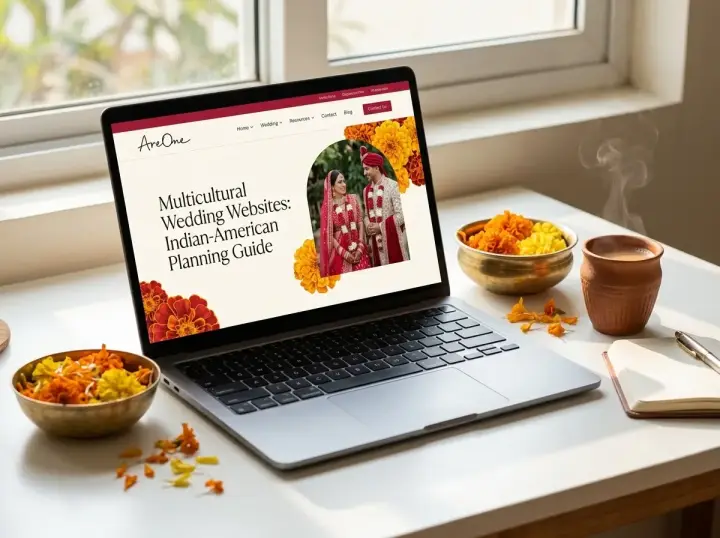
TL;DR: Designing a flawless Indian American wedding website requires balancing cultural traditions, smart dual-language features, and an intuitive layout to ensure every guest feels uniquely welcomed.
Getting married is an exciting journey. Blending two beautifully distinct cultures makes the experience even more profound. When you plan a fusion wedding, your digital home base needs to reflect both sides of your unique story.
Creating a thoughtful Indian American wedding website is the perfect way to bridge the gap between continents, languages, and generations. Whether you are hosting a vibrant traditional Hindu ceremony followed by an elegant Western reception, or a blended multicultural weekend, your guests need accessible information.
Your digital presence sets the tone for the entire celebration. It is often the first glimpse your friends and family get into how your special day will unfold. You want this experience to be seamless, welcoming, and culturally respectful.
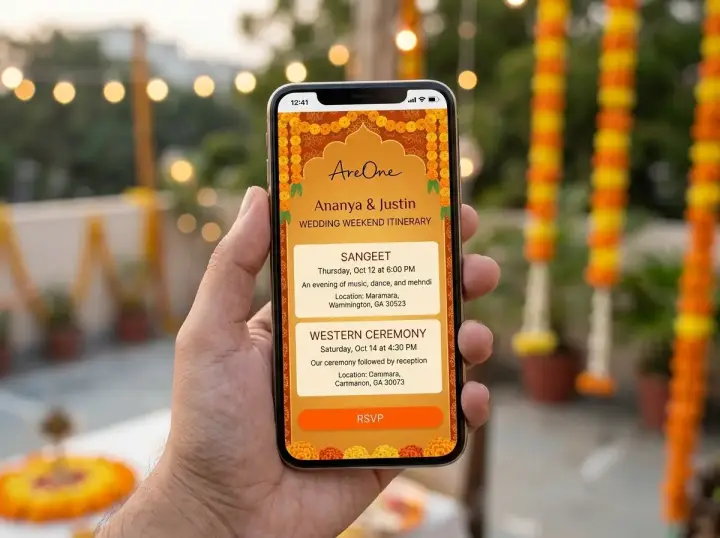
We know that planning a fusion event comes with its own unique set of logistical challenges. From explaining complex multi-day timelines to ensuring older relatives can easily navigate the RSVP process, there is a lot to consider.
Rest assured, building a space that honors both families does not have to be stressful. With the right tools and a bit of strategic planning, you can create a digital experience that flawlessly unites everyone you love.
Who Needs a Multicultural Wedding Invite?
A multicultural wedding invite is essential for couples navigating diverse family backgrounds. If your guest list spans multiple countries or primary languages, a standard one-size-fits-all approach simply will not work.
Consider the classic scenario of an Indian-American union. You might have grandparents tuning in from Mumbai who prefer reading details in Hindi or Gujarati. At the same time, you have college friends flying in from Chicago who only speak English.
Both groups are equally important. Both groups need to feel comfortable and informed. A standard template forces one group to compromise, which can lead to confusion or endless text messages asking for clarification.
Using a smart, bilingual platform allows you to cater to everyone simultaneously. It eliminates the friction of language barriers and ensures that cultural nuances are respected.
This approach is also invaluable for mixed-language households. When an invitation arrives, families should not have to rely on a single translator within the home to understand the venue details or the dress code expectations.
By prioritizing accessibility, you show your guests profound respect. You communicate that their presence is valued and that you have thoughtfully considered their experience.
UX Rules for a Flawless Indian American Wedding Website
User experience (UX) is the silent backbone of any successful digital platform. When designing a bilingual wedding website, your primary goal is absolute clarity. The layout must guide guests intuitively, without overwhelming them with walls of text.
Typography plays a crucial role in readability. Different languages require different visual spacing. For instance, scripts like Devanagari often need slightly larger font sizes or increased line height to remain legible compared to standard Latin characters.
Visual hierarchy is another critical element. Important details like dates, times, and venue names should immediately catch the eye. You can achieve this by using bold fonts or subtle color contrasts to draw attention to key logistical information.
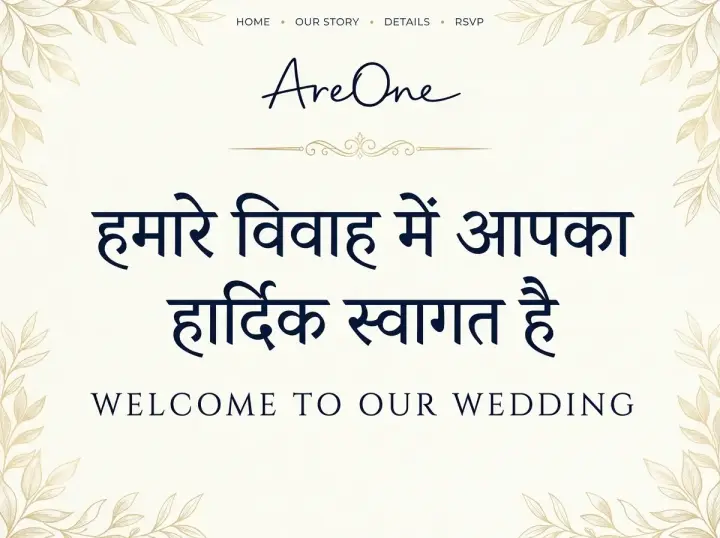
We recommend keeping the navigation menu simple. Stick to standard categories like 'Our Story', 'Events', 'Travel', and 'RSVP'. Avoid using overly clever or abstract names for these tabs, as they can confuse non-native speakers.
Consistency across both languages is vital. If your English page features a specific image or timeline icon, the translated page should mirror that exact layout. This creates a cohesive and predictable experience for users toggling between languages.
If you want to dive deeper into digital etiquette, you can explore the guide to clear, elegant bilingual wedding invitations. It offers extensive insights into blending digital layouts with cultural expectations.
Recommended ReadingEnglish–French Invitation Wording Examples & Design Guide →Side-by-Side vs. Stacked vs. Language Toggle
When presenting two languages, you generally have three design options: side-by-side, stacked, or a language toggle. Each method serves a specific purpose, but they yield very different user experiences.
Browse invitation layouts that fit your plan.
Compare layouts for schedules, travel details, guest guidance, and RSVP information before choosing one for your invitation.



The side-by-side layout places both languages next to each other in columns. This works well for short, printed invitations. However, on mobile devices, side-by-side columns become cramped, unreadable, and frustrating to scroll through.
The stacked approach places the primary language first, followed immediately by the translation underneath. While easier to read on mobile, it creates an excessively long page. Guests must scroll past content they cannot read just to find the next section.
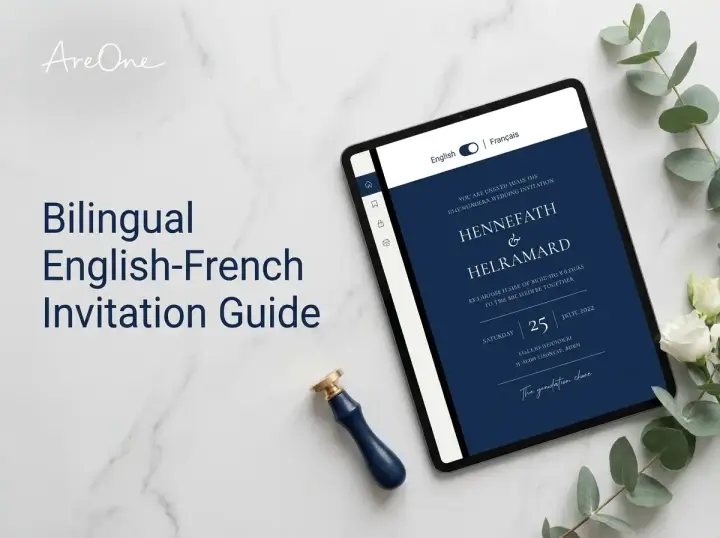
The language toggle is the modern, elegant solution. By utilizing a simple button at the top of the screen, guests can select their preferred language instantly. The page cleanly refreshes to display only the relevant text.
AreOne offers a seamless auto-language feature that detects a guest's browser settings and instantly displays the correct language. You can learn more about how this elevates guest interactions by reading our multilingual wedding website UX rules.
The Essential Translation Checklist
Translating an invitation is rarely a simple word-for-word exchange. Cultural nuances dictate how information should be presented. A robust translation checklist ensures that no vital detail gets lost in the process.
It is easy to make minor errors that cause major confusion for traveling guests. When handling multiple alphabets and localized phrasing, a systematic approach is your best defense against miscommunication.
Before you publish anything, sit down with native speakers from both families. Review the text meticulously. Pay special attention to tone, as an informal phrase in English might inadvertently sound disrespectful when directly translated.
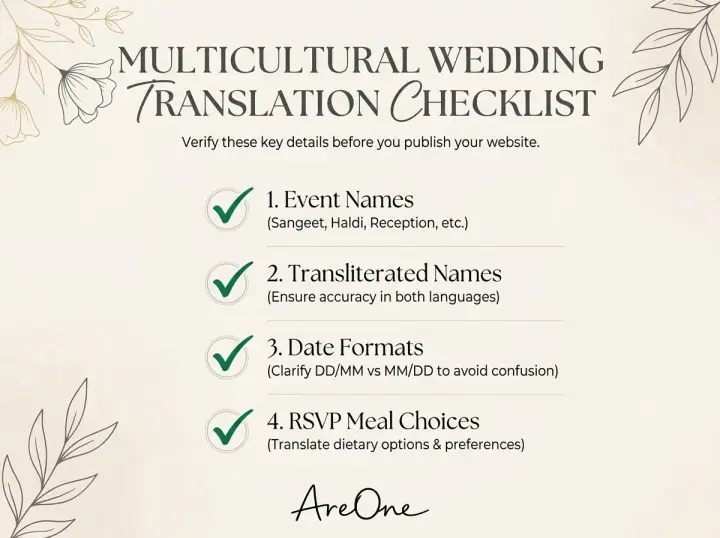
To help you stay organized, we have compiled a definitive checklist of elements that require careful localization.
- Names and Spellings: Verify that phonetic translations of Western names into other scripts are accurate and do not unintentionally create awkward meanings.
- Honorifics and Titles: Ensure cultural markers of respect (such as adding 'Ji' in Hindi or formal family titles) are appropriately placed for elderly relatives.
- Dates and Formats: Clarify the date format. The US uses MM/DD/YYYY, while most of the world uses DD/MM/YYYY. Always spell out the month to avoid disastrous travel mix-ups.
- Time Zones: Specify whether the times listed are Eastern, Pacific, or Indian Standard Time (IST), especially if you are streaming the ceremony for virtual guests.
- Venue Addresses: Provide translated directions or localized landmarks for international guests who might not be familiar with US highway systems or standard street addresses.
- Dietary Restrictions: Ensure translations for dietary needs (vegan, halal, strict vegetarian without garlic/onion) are highly specific to avoid catering disasters.
Dual-Language Copy-Paste Wording Examples
Finding the right words can be daunting. You want to sound warm, inviting, and celebratory while clearly communicating a complex itinerary. Striking the perfect balance between modern brevity and traditional respect is an art form.
For a multicultural event, your wording must serve as a gentle guide. You are not just inviting people; you are educating them on traditions they might never have experienced before. Clear explanations foster enthusiasm and comfort.
Here are a few versatile, copy-paste wording examples you can adapt for your digital home base.
Example 1: The Blended Welcome
'We are overjoyed to invite you to celebrate our union. Our wedding weekend will be a beautiful blend of traditional Indian rituals and Western celebrations. Whether you are dancing at the Sangeet or witnessing our vows, your presence means the world to us.'
Example 2: Explaining the Baraat (For Western Guests)
'Join us for the Baraat! This is a vibrant, high-energy groom's procession. Expect loud music, dancing in the street, and a whole lot of joy as we parade toward the venue. Comfortable shoes are recommended!'
Example 3: Formal Hindu Ceremony Invitation
'With the blessings of our elders, we cordially invite you to grace the auspicious occasion of our marriage. Please join us as we take our sacred vows around the Agni (holy fire).'
To help you structure your text, here is a helpful comparison table showing how to balance English explanations with cultural traditions.
| Event Type | English / Western Description | Cultural / Traditional Context |
|---|---|---|
| The Sangeet | An evening of dinner, drinks, and choreographed dance performances by family and friends. | A traditional pre-wedding celebration focused on music, joy, and the blending of the two families. |
| The Baraat | The lively groom's procession before the ceremony begins. | A celebratory parade featuring a dhol player, dancing, and the groom's vibrant arrival. |
| The Ceremony | The exchange of vows and rings. | The Mandap ceremony, featuring the Mangal Phera (circling the fire) and the Saptapadi (seven steps). |
| The Reception | Dinner, toasts, and open dance floor. | A grand celebration honoring the newlyweds, featuring fusion cuisine and modern entertainment. |
Using these templates ensures clarity. If you need a beautiful canvas to display these words, we suggest you browse our modern templates built specifically for multi-day events.
4 Common Cultural Pitfalls to Avoid
Even with the best intentions, couples frequently encounter a few specific stumbling blocks when organizing a fusion event. Being aware of these pitfalls allows you to proactively navigate around them.
A smooth guest experience requires anticipating questions before they are asked. When blending traditions, what seems obvious to one family might be foreign to the other.
Need a faster RSVP flow?
Use AreOne to collect guest replies, meal choices, and reminders in one clean workflow.
1. Assuming Vocabulary is Universal
Do not assume your Western friends know what a Mehndi or Haldi ceremony entails. Always provide a brief, joyful explanation of what the event is, what its significance is, and what guests are expected to do.
If a guest does not understand an event, they might feel intimidated and choose not to attend. Clear explanations foster inclusivity. You can reference excellent cultural guides from authoritative sites like The Knot to help craft your explanations.
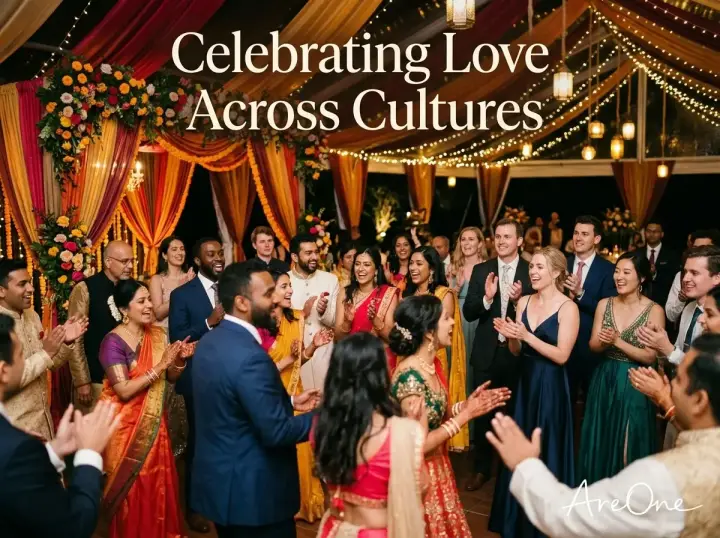
2. Ignoring Dress Code Anxiety
Western guests attending an Indian ceremony for the first time often stress about what to wear. They worry about cultural appropriation versus cultural appreciation.
Dedicate a section of your site to attire. Clearly state that wearing traditional Indian clothing (like Lehengas or Kurta pajamas) is welcomed and encouraged. Provide links to reliable online retailers where guests can rent or purchase appropriate outfits.
3. Cluttered Multi-Day Timelines
Fusion weddings often span three to four days with multiple events per day. Listing every single event chronologically on one massive page creates a confusing wall of text.
Instead, visually separate the events by day. Clearly indicate which events are for immediate family only, and which are open to all guests. Utilize a robust system with customized visibility for different guest groups, much like AreOne's advanced RSVP tracking.
4. Overcomplicating the RSVP for Elderly Guests
While digital RSVPs are convenient, a complex user interface can frustrate older relatives. If they cannot figure out how to submit their meal choice, they will simply call you—defeating the purpose of an automated system.
Ensure the RSVP button is prominent. The form should be straightforward, fast, and available in their native language. For families managing tight budgets who still want premium features, exploring flexible premium pricing options can provide access to these seamless tools without breaking the bank.
For additional insights into handling cross-cultural expectations gracefully, Brides magazine offers a fantastic breakdown of traditions that you can share with your bridal party.
Flawless Digital Harmony
Crafting a platform that beautifully balances two worlds is an incredible way to kick off your marriage. By focusing on smart design, clear communication, and deep cultural respect, you set the stage for an unforgettable celebration.
When tying the knot across cultures, ensure your Indian American wedding website speaks volumes before anyone even says 'I do'. It is your first opportunity to show your guests the beautiful, blended life you are building together.
Frequently Asked Questions
Find quick answers to common questions about this article.
No approved comments yet.