
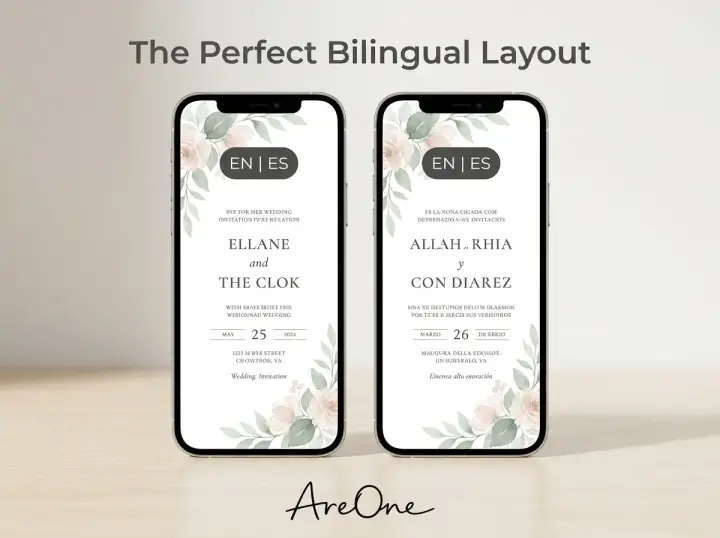
TL;DR: Designing a stunning bilingual wedding invitation requires smart typography, culturally accurate translations, and intuitive layouts that make every guest feel instantly welcomed and respected.
Why You Need a Flawless Bilingual Wedding Invitation
Planning a celebration that bridges two beautiful cultures requires immense care, empathy, and clear communication. A well-designed bilingual wedding invitation does so much more than simply share your date and venue. It acts as the very first welcoming embrace for your diverse guest list. When families speak different languages, your invitation sets a tone of inclusivity, ensuring that no one feels like an afterthought.
Creating a seamless experience for your international guests starts long before they board a plane or arrive at your venue. The moment they open their physical envelope or click the link to your digital invite, they should immediately understand the essential details without confusion or stress. A meticulously crafted multicultural wedding invite removes friction, eliminates anxiety, and builds excitement for your upcoming celebration.
If you are blending families, languages, or traditions, clarity is your ultimate priority. You want your grandmother to read the date easily, while simultaneously giving your partner's overseas relatives exact directions to the reception. Achieving this balance requires strict attention to design, layout, and phrasing. We will walk you through exactly how to balance elegance with practicality, ensuring your invitations are perfect.
Who Multilingual Invites Are Truly Designed For
Couples often wonder if they need to go through the effort of designing a multicultural wedding invite. If you are asking the question, the answer is usually yes. These specialized invitations are designed for a variety of beautiful, modern relationship dynamics. First and foremost, they serve cross-border couples where the families of the bride and groom reside in different countries and speak distinct native tongues.
They are equally vital for second-generation immigrants who want to honor their cultural heritage while simultaneously accommodating their local, English-speaking friends. Paying tribute to your roots by featuring your family's native language alongside English is a profound gesture of respect. It shows older relatives that their comfort and understanding are paramount to your celebration.
destination weddings frequently demand a bilingual approach. If you are hosting your special day in a foreign country, you may need to provide specific localized information. Your guests will need navigation tips, accommodation details, and local customs explained clearly. Presenting this information in a polished, multilingual format guarantees that everyone, regardless of their linguistic background, can navigate your wedding weekend seamlessly. You can easily start building your custom design by browsing our curated digital templates.
Essential UX Rules: Layout, Order, Typography, and Clarity
Designing a dual-language interface requires a strict adherence to user experience rules. Without a logical layout, your bilingual wedding invitation will quickly become a cluttered, unreadable mess. The primary rule of thumb is visual hierarchy. You must establish a clear separation between the two languages so that the reader's eye naturally gravitates toward the language they understand.
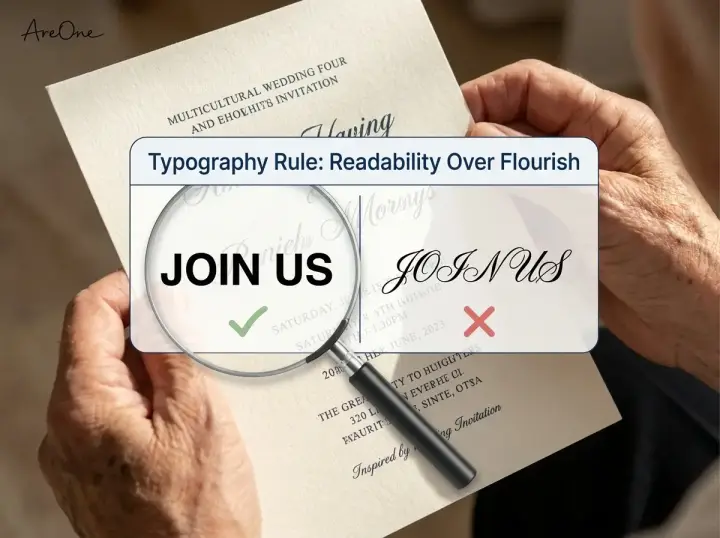
Typography plays a massive role in this separation. You should select fonts that not only complement your wedding aesthetic but also visually distinguish the two languages. For instance, you might use a bold serif font for English and an elegant sans-serif for Spanish. However, you must ensure both fonts are perfectly legible on small mobile screens. Never sacrifice readability for a fancy, overly intricate script font that elderly guests cannot decipher.
Consistency is another non-negotiable rule. Whichever layout style you choose, you must apply it universally across your entire suite. If English is on the left and French is on the right on the main page, that exact order must remain identical on the details page, the itinerary, and the travel section. For deeper insights into crafting a perfectly usable interface, review our comprehensive guide on multilingual wedding website UX rules.
Side-by-Side vs. Stacked vs. Language Toggle
When building a digital bilingual wedding website, you have three primary methods for displaying your translated text. Each method offers distinct advantages and challenges depending on the length of your content and the devices your guests use. The side-by-side layout places both languages next to each other in parallel columns. This is elegant on desktop monitors but frequently breaks down on narrow mobile phone screens.
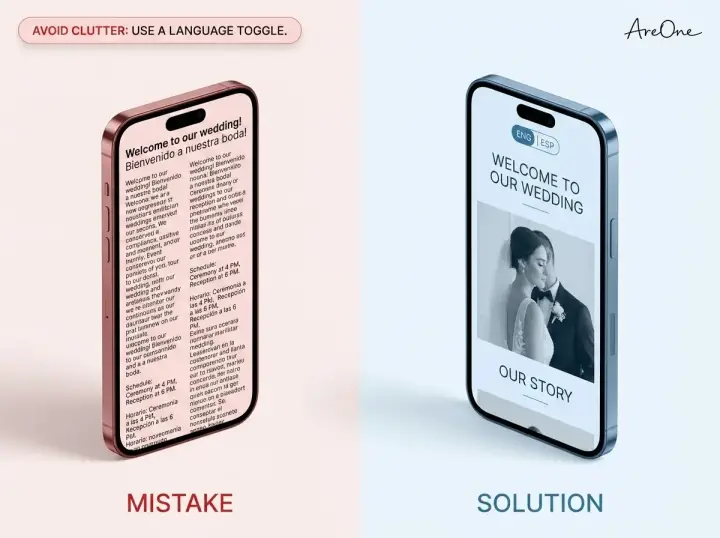
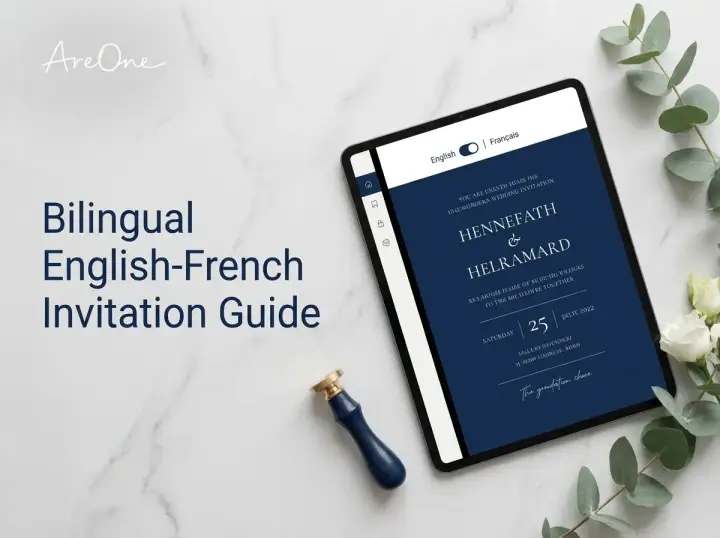
The stacked layout places one language directly above or below the other, usually separated by a subtle visual divider or distinct color. This approach guarantees mobile responsiveness and ensures no text gets squished. Finally, the language toggle is the most sophisticated digital solution. A simple button allows guests to instantly switch the entire page between languages, creating an clean, uncluttered interface.
| Layout Style | Best Used For | Pros | Cons |
|---|---|---|---|
| Side-by-Side | Short, formal invitations on printed cards or desktop sites. | Highly traditional, visually balanced, and equitable. | Terrible for small mobile screens; limits word count. |
| Stacked | Mobile-first digital designs and longer detail pages. | Excellent readability, highly responsive, easy to scroll. | Can make the page feel exceptionally long. |
| Language Toggle | Modern digital platforms and comprehensive wedding sites. | Cleanest user experience, identical to native apps. | Requires digital capabilities; unavailable for print. |
For tech-savvy couples prioritizing a frictionless experience, the automatic language toggle is undeniably the superior choice. It drastically reduces the cognitive load on your readers, allowing them to focus on the joy of your upcoming union rather than navigating complex dual-column formatting.
Recommended ReadingBilingual Invite Etiquette: Order, Typography, Names →The Ultimate Translation Checklist for Multicultural Couples
Translating wedding details is different from translating standard conversational text. A single misplaced word or misunderstood date format can cause guests to arrive on the wrong day or at the wrong venue. To prevent logistical nightmares, you must follow a rigorous translation checklist. Never assume that a literal word-for-word translation will convey the correct cultural tone.
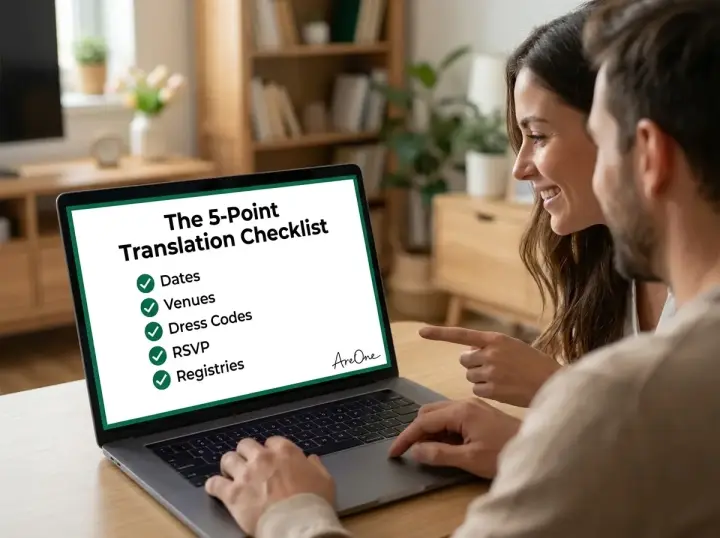
Wedding vocabulary is steeped in tradition, formality, and specific etiquette rules. Your translations must reflect the appropriate level of respect required by your distinct cultural background. Use the following comprehensive checklist to ensure every single crucial detail is accurately converted across both languages.
- Dates and Times: Ensure absolute clarity on numeric date formats. Differentiate between the American MM/DD/YYYY and the European DD/MM/YYYY formats by spelling out the month.
- Ceremony Venues: Translate the descriptive parts of the venue, but leave the official legal name of the building in its native language to help taxi drivers and navigation apps.
- Dress Codes: Cultural expectations around attire vary wildly. Explain 'Black Tie' or 'Cocktail Attire' descriptively if a direct translation does not exist in the second language.
- RSVP Deadlines: Make the final response date incredibly prominent and unmistakable in both languages.
- Gift Registries: Handle gifting etiquette delicately, as asking for funds or presents requires different levels of formality depending on the culture.
Running your drafts past a native speaker who understands formal event etiquette is essential. Professional wedding planners or trusted family members can spot awkward phrasing that automated tools miss. You can also consult authoritative etiquette resources like The Knot for widely accepted bilingual phrasing standards.
Deep Dive: Translating Names, Honorifics, and Complex Formatting
One of the most sensitive areas of your bilingual wedding invitation involves names and honorifics. A rigid rule of thumb is that proper names should generally never be translated or altered. If your name is 'Michael,' you do not need to change it to 'Miguel' on the Spanish version of the invite unless that is how your family formally addresses you. Authenticity matters here.
Honorifics, however, require careful cultural adaptation. Titles like 'Mr.' and 'Mrs.' do not simply translate to 'Señor' and 'Señora' without carrying slightly different weights of formality. In some Asian cultures, specific honorific suffixes must be attached to family members based on their exact age and relational hierarchy. Failing to use the correct respectful prefix can unintentionally offend older, traditional relatives.
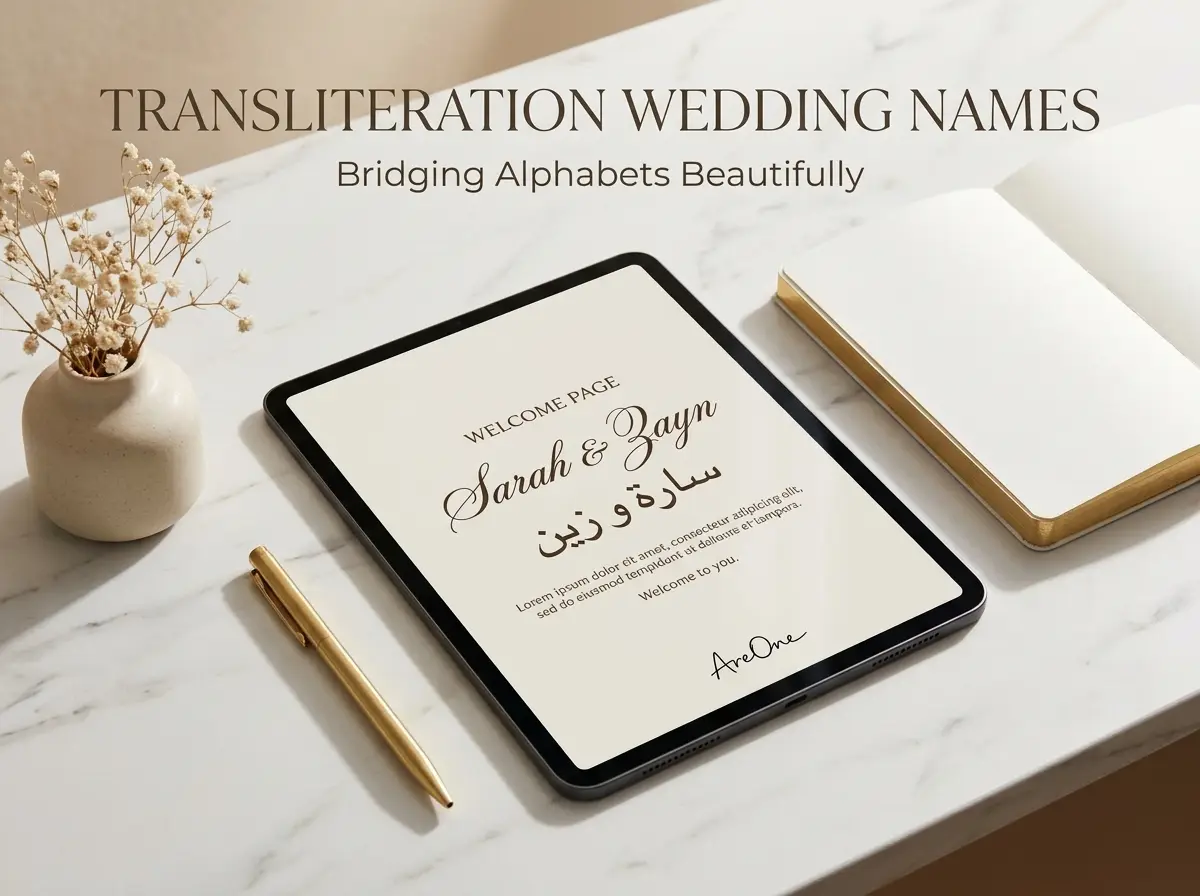
When formatting names across two different alphabets or character sets, ensure you maintain equal font sizing. Presenting one language in a massive, bold font while shrinking the other into tiny text creates an unbalanced visual hierarchy that feels disrespectful. Treat both languages with equal visual importance to foster a true sense of unity.
Copy-Paste Wording Examples for a Multicultural Wedding Invite
Browse invitation layouts that fit your plan.
Compare layouts for schedules, travel details, guest guidance, and RSVP information before choosing one for your invitation.



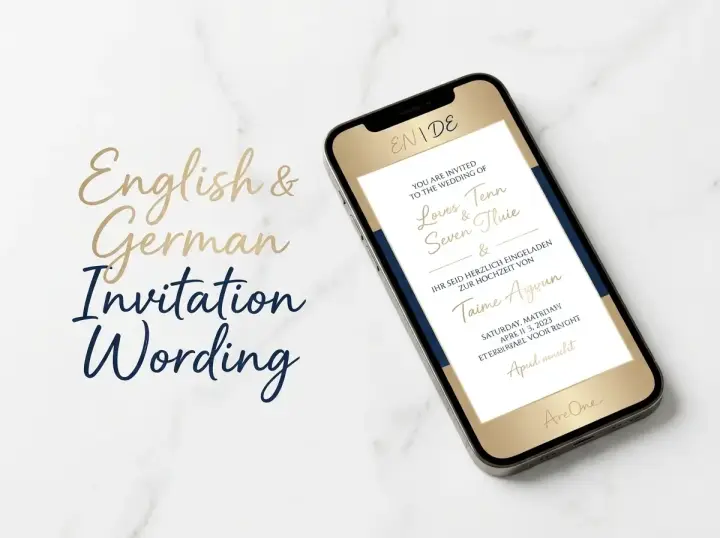
Finding the perfect words to blend two families can feel intimidating. To help you structure your text, we have developed several adaptable templates. These examples showcase how to gracefully balance two languages while maintaining the joyful, welcoming spirit of your celebration. Simply copy, paste, and adjust the details to fit your unique love story.
Example 1: The Formal English & Spanish Dual Template
This option is perfect for traditional, elegant affairs where parents are officially hosting the event. It maintains a respectful tone across both languages.
English:
Mr. and Mrs. Robert Smith and Mr. and Mrs. Carlos Garcia
request the honor of your presence
at the marriage of their children
Emma Smith & David Garcia
Saturday, the fourteenth of October, two thousand twenty-six
at four o'clock in the afternoon.
Spanish:
Sr. y Sra. Robert Smith y Sr. y Sra. Carlos Garcia
tienen el honor de invitarles
al enlace matrimonial de sus hijos
Emma Smith y David Garcia
Sábado, catorce de octubre de dos mil veintiséis
a las cuatro de la tarde.
Example 2: The Modern English & French Casual Template
If you are hosting a relaxed, modern celebration, you can bypass the formal parent hosting lines and speak directly to your friends and loved ones. This tone is warm, inviting, and direct.
English:
We're getting married!
Please join Emma & Julien
as we celebrate our love and tie the knot.
October 14, 2026 | 4:00 PM
The Botanical Gardens, London.
Dinner and dancing to follow.
French:
Nous nous marions !
Rejoignez Emma et Julien
pour célébrer notre amour.
14 Octobre 2026 | 16h00
The Botanical Gardens, Londres.
Dîner et soirée dansante à suivre.
Notice how in the modern example, the venue name 'The Botanical Gardens' remains primarily intact. This ensures that French-speaking guests can easily type the exact English name into Google Maps without getting lost in translation. Thoughtful details like this make a massive difference in guest experience.
Need a faster RSVP flow?
Use AreOne to collect guest replies, meal choices, and reminders in one clean workflow.
Critical Common Mistakes to Avoid with a Bilingual Wedding Website
Even with the best intentions, couples frequently stumble into easily preventable errors when building a bilingual wedding website. The first and most catastrophic mistake is relying on raw, automated machine translation. While basic translation apps are decent for casual browsing, they completely fail at capturing the formal nuances, emotional warmth, and specific etiquette required for a wedding. Always use human proofreaders.
The second major pitfall is visual clutter. Couples often try to cram an enormous amount of dual-language text onto a single physical card or a narrow mobile screen. This drastically increases cognitive load, making the invitation overwhelming to read. If you have extensive details regarding travel, dress codes, and timelines, heavily rely on digital solutions rather than printing tiny, unreadable text on paper.
The third common error involves forgetting to translate the interactive elements. Couples will painstakingly translate their romantic backstory, but leave the dietary requirement questions, submit buttons, and digital RSVP forms strictly in English. This creates a frustrating roadblock for international guests trying to confirm their attendance. Every single touchpoint must be localized.
Finally, mismanaging date and time formatting causes endless logistical chaos. Writing '04/05/2026' means April 5th in America, but May 4th in Europe. You must eliminate this ambiguity by spelling out the month completely. be mindful of the 12-hour versus 24-hour clock. Clearly indicate 'AM' or 'PM', or utilize the 24-hour military format if that is the standard for your secondary language.
Seamlessly Blending Traditions and Crafting the Perfect Invite
Uniting two distinct families, cultures, and languages under one joyous roof is a monumental and beautiful achievement. The care you pour into your communication sets a standard of warmth that will resonate throughout your entire wedding weekend. By utilizing smart design rules, precise phrasing, and intuitive digital tools, you guarantee that every single guest feels profoundly valued.
Crafting the perfect bilingual wedding invitation speaks volumes in any language. It beautifully bridges the gap between diverse backgrounds, ensuring that love remains the universally understood message of your celebration. Take your time, focus on clarity, and let your unique dual-heritage shine brightly.
Frequently Asked Questions
Find quick answers to common questions about this article.
No approved comments yet.