
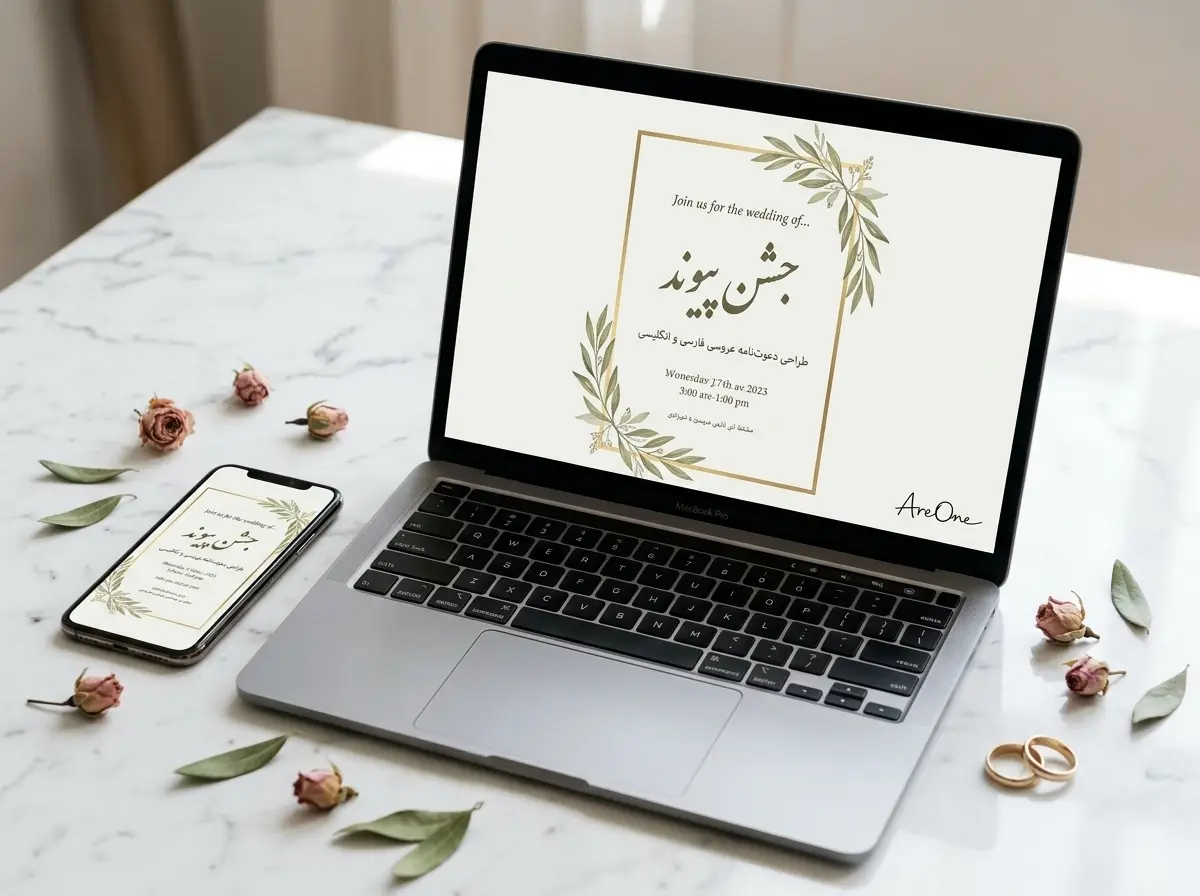
TL;DR: Crafting beautiful Persian English wedding invitation wording means balancing cultural respect, clear communication, and elegant design for both sides of your family.
Planning a multicultural wedding invite brings immense joy as you blend beautiful traditions. However, it also comes with unique communication challenges.
If you are reading this guide, you are probably trying to figure out how to navigate the intricate and sometimes confusing world of Persian English wedding invitation wording. You want to achieve this without confusing your modern English-speaking friends or offending your traditional Persian elders.
Bringing two distinct families together starts long before the ceremony itself takes place. The very first impression your guests will ever receive is the invitation they open. a well-designed bilingual wedding website or a thoughtful digital invite sets a welcoming, inclusive tone for the entire event.
We will ensure every single guest feels honored and knows exactly when and where to celebrate your big day.
Who Multilingual Invites Are For (Common Scenarios)
Couples frequently underestimate the profound emotional impact of speaking to a guest in their own native language. Multilingual invitations are not simply a logistical tool used to transmit data. They are a powerful gesture of hospitality and love.
If you have guests traveling from overseas or older relatives who vastly prefer reading Farsi, providing the information in a language they understand instantly removes friction. It eliminates the anxiety of misinterpreting important travel details and ensures they feel perfectly comfortable.
A very common scenario involves blended families. Often, the couple themselves speaks English primarily in their day-to-day lives, but the parents, aunts, uncles, and grandparents heavily rely on Persian for formal communication. In traditional Persian culture, honorifics and deep respect are strictly embedded in how you address someone officially.
A simple and direct wedding invitation message in english might feel far too casual or even blunt when translated directly into Farsi without proper cultural adaptation.
Another typical situation is hosting a destination wedding or a massive multi-day event. International guests must carefully navigate flights, accommodations, visa requirements, and complex schedules. Providing clear, easily readable details in both languages prevents endless text messages asking you for stressful last-minute clarifications.
UX Rules: Layout, Order, Typography, Clarity
When dealing with Persian English wedding invitation wording, you are not just managing two separate languages. You are actually managing two completely different reading directions. English reads left to right, while Persian script reads right to left.
This specific difference introduces significant user experience challenges on both printed paper and digital screens. Your overall layout must guide the reader's eye naturally without ever feeling visually cluttered or overwhelming.
If you try to aggressively squeeze too much dual-language text onto a single physical paper card, the elegant typography rapidly turns into an unreadable mess. For older guests with changing vision, tiny fonts are a massive and frustrating barrier to entry.
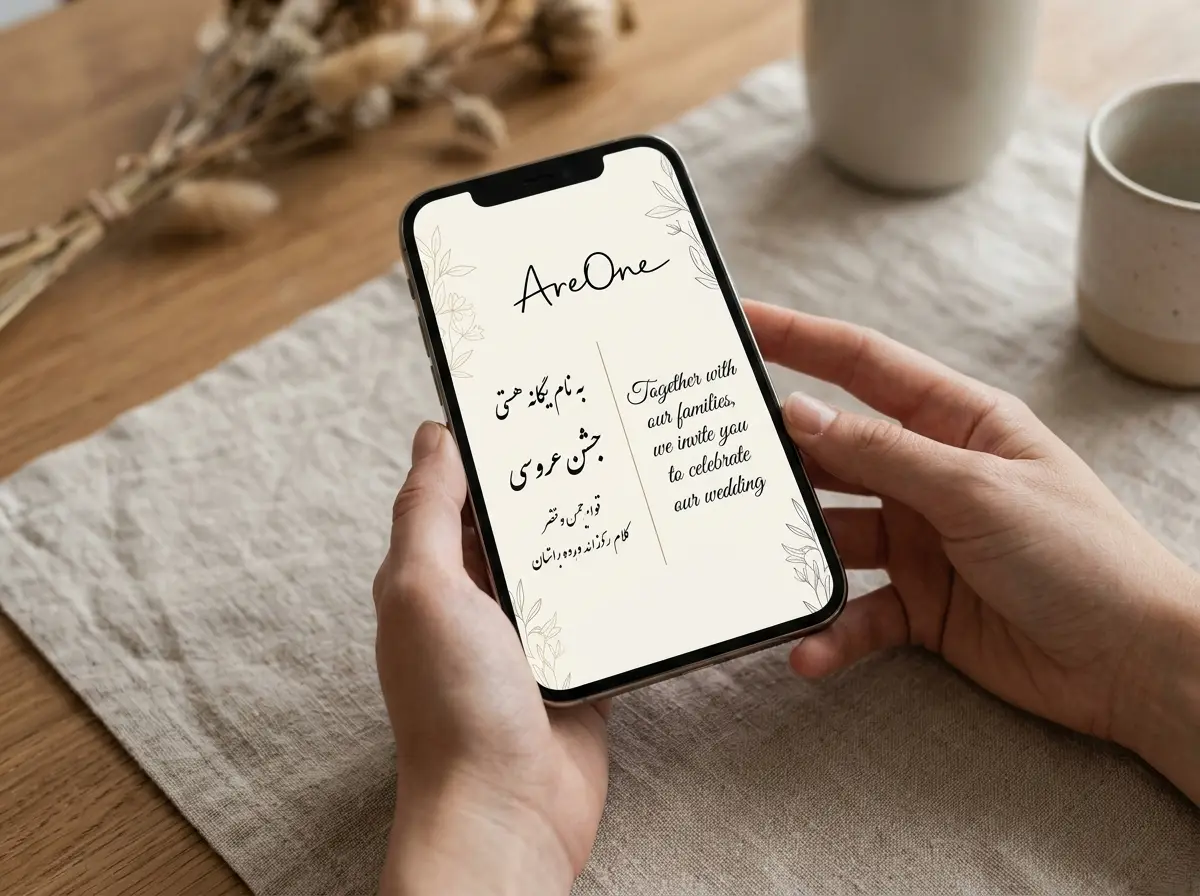
You must ruthlessly prioritize readability by choosing complementary fonts that respect both alphabets. A clean, modern sans-serif font for the English side pairs beautifully with a traditional, sweeping Nasta'liq or a legible modern Persian web font.
Visual hierarchy matters immensely in these situations. Make sure the couple's names, the exact dates, and the specific locations stand out boldly. Never sacrifice pure clarity for the sake of aesthetics.
Side-by-Side vs Stacked vs Language Toggle
When choosing the layout for your Persian English wedding invitation wording, you are making a critical design decision. You generally have three main options available, each with distinct pros and cons depending heavily on your chosen medium.
| Layout Style | Best Medium For This Style | Major Pros | Major Cons |
|---|---|---|---|
| Side-by-Side | Wide paper cards or desktop websites | Provides equal visual weight and respect for both languages simultaneously. | Requires very wide formatting; looks awful and cramped on mobile phones. |
| Stacked (Top/Bottom) | Standard physical invites or simple emails | Very easy to read vertically without moving the eyes back and forth. | Makes the invite extremely long; the bottom language inevitably feels 'second' in importance. |
| Language Toggle | Bilingual wedding websites and digital invites | Incredibly clean, modern, and shows only what the specific guest actually needs to see. | Only works digitally; cannot be printed on traditional paper invitations. |
For modern, tech-savvy couples, the digital language toggle feature is the absolute winner by a wide margin. When a guest opens the digital invite on their smartphone, they can simply tap a sleek button to switch instantly between English and Farsi.
This creates a clean, personalized experience that physical paper simply cannot replicate. To understand exactly how to execute this perfectly without frustrating your older relatives, review our multilingual wedding website UX rules.
Translation Checklist (Names, Honorifics, Dates, Addresses)
A major headache for couples optimizing their Persian English wedding invitation wording is realizing that a direct, word-for-word translation rarely works in reality. Cultural context dictates everything when formatting your text.
To help you successfully manage this tricky process, we have created a comprehensive translation checklist. Use this robust list to ensure no vital details are lost in translation or accidentally misinterpreted across languages.
- Names and Honorifics: Do not just translate the names directly. Ensure you are using highly appropriate Persian titles like Aghaye for Mister and Khanom for Missus when addressing older, respected relatives.
- The Calendar Discrepancy: English uses the Gregorian calendar, while traditional Persian formatting uses the Jalali calendar. You must accurately convert the date and state the specific day of the week clearly in both unique formats.
- Time Formats: Ensure you clarify morning and evening heavily for the English side, and use the correct, culturally standard Persian phrasing for morning, afternoon, or evening.
- Venue Addresses: Never attempt to translate the literal meaning of a local street name into Persian. Keep the formal venue address in English, or carefully transliterate it so guests can actually find it safely on maps.
- RSVP Instructions: Be incredibly literal and direct here. Make sure the absolute final deadline is crystal clear in both languages to avoid chasing people down.
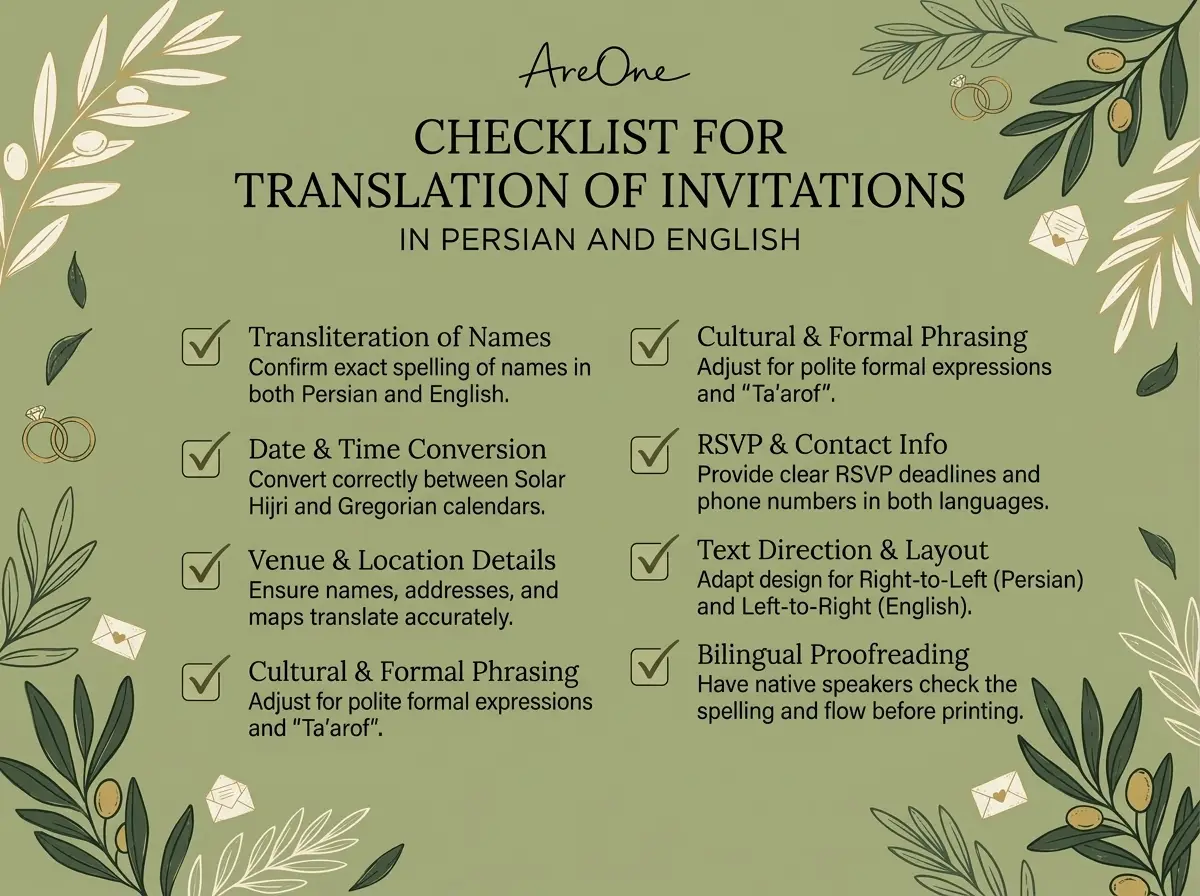
Reviewing this detailed checklist multiple times with a fluent speaker will save you countless hours of stress as the big day rapidly approaches.
Persian English Wedding Invitation Wording: Examples in Both Languages
Finding the precise, perfect Persian English wedding invitation wording requires striking a delicate balance. You must bridge poetic Persian traditions and straightforward English expectations. Here are a few effective copy-paste examples you can adapt instantly for your own use.
For a formal, traditional tone, you might start the Persian side with a classic, revered poem. The English side can mirror the overarching romantic sentiment without being a clunky literal translation.
Example 1: Formal & Traditional
English: Together with their families, [Partner A] and [Partner B] joyfully invite you to celebrate their marriage. Please join us for an elegant evening of dining, dancing, and endless love.
Persian Context: In Farsi, you would use strictly formal language honoring the parents first. You would specifically name the families, and use respectful verbs for the act of inviting your respected guests.
Example 2: Modern & Direct
English: We are getting married! [Partner A] and [Partner B] invite you to share in our incredible joy.
Persian Context: A more modern Iranian couple might skip the heavy, ancient poetry entirely. Instead, they opt for a warm, welcoming phrase expressing deep happiness that you are joining them on their best day.
Taking the time to craft your unique message means that both your English-speaking friends and Persian family members feel equally valued. You do not have to settle for dry, impersonal text when you have so many rich cultural elements to draw from.
Using these exact templates on your wedding invitation templates ensures that you are communicating your love effectively without ever sounding rigid or unnatural. The ultimate goal is to make your multicultural wedding invite feel cohesive.
Recommended ReadingBilingual Invite Etiquette: Order, Typography, Names →Common Cultural Pitfalls to Avoid
Creating a seamless dual-language experience is a delicate art form. Many well-meaning couples fall into predictable traps that can heavily confuse guests or cause unintentional offense among the elders.
The biggest mistake in Persian English wedding invitation wording is relying on machine translation tools. These automated systems completely fail to grasp the heavy nuances of Persian respect levels.
A literal translation of a casual English phrase might sound rude, demanding, or cold in Farsi. Always have a native-speaking elder or professional translator carefully review your final copy. For professional insights on wording etiquette, authoritative sources like the Emily Post Institute offer excellent advice on formal structures.
When you desperately try to fit both complete languages onto one physical paper card, you completely sacrifice your white space. White space is essential for readability and visual elegance.
Browse invitation layouts that fit your plan.
Compare layouts for schedules, travel details, guest guidance, and RSVP information before choosing one for your invitation.



If your elderly guests need a magnifying glass just to read the street address, you have failed the design test. This exact issue is why a digital smart RSVP tracking system is vastly superior.
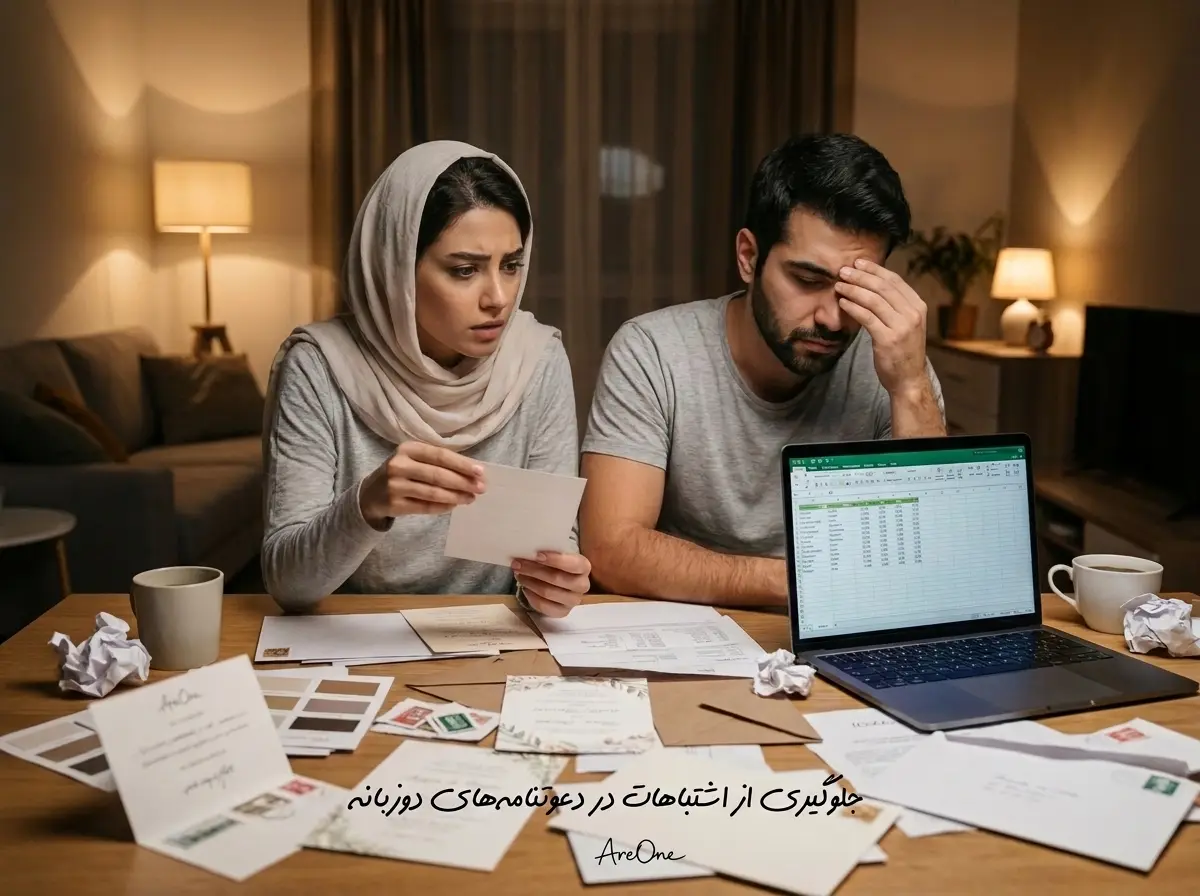
In modern Western cultures, it is becoming extremely common for young couples to casually omit parent names. However, in Persian culture, omitting the parents' names from a formal printed invitation can be heavily seen as a massive slight.
Even if you are paying for the entire wedding yourselves, including a dedicated line that actively honors the families is a crucial sign of generational respect.
Traditional Persian culture often assumes an implicit, unspoken yes to a wedding invitation. Formal RSVPing isn't always a strict habit among the older generations who view attending as a mandatory duty of love.
If you desperately need exact headcounts for your expensive catering, your wording must be extremely firm but polite. For more general advice, Brides magazine provides solid tips on enforcing RSVP deadlines gracefully.
Wedding Invitation Card In English
If you are designing a physical wedding invitation card in english specifically for the non-Persian side of your expansive guest list, ultimate clarity is your best friend.
Need a faster RSVP flow?
Use AreOne to collect guest replies, meal choices, and reminders in one clean workflow.
A standard English card typically follows a very predictable, time-tested flow. It includes the host line, the request line, the names of the couple, the exact date and time, the location, and finally the reception details.
The very best wording patterns keep sentences intentionally short and strictly informative. For example, stating that the honor of your presence is requested remains the gold standard for formal, black-tie events.
A massive common mistake here is drastically overcomplicating the dress code or parking instructions right on the main card. You must keep the primary card clean, beautiful, and elegant.
Push the heavy logistical details, such as hotel blocks and shuttle times, to a separate details card or directly to your comprehensive wedding website. By keeping the English card minimalist, you set a elegant expectation.
Wedding Invitation Message In English
When you are sending a digital wedding invitation message in english, the rules of engagement change significantly. Digital messages naturally require immediate user engagement.
You passionately want to capture their attention right away without sounding like a dry corporate memo. The absolute best pattern for a digital text message starts with a very warm, personal greeting.
Follow this friendly greeting immediately with a clear, obvious, clickable link leading straight to your full digital invitation platform. Ensure the link preview looks beautiful on their device.
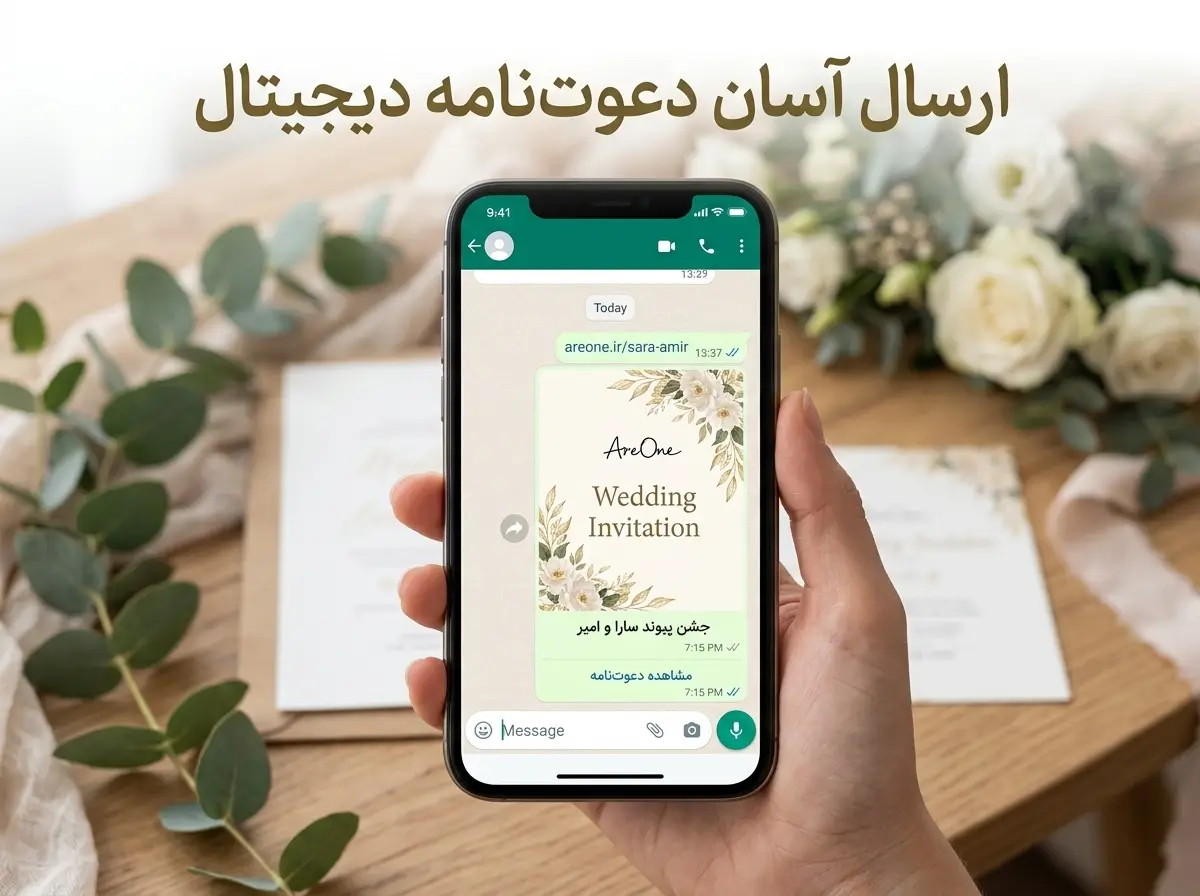
A massive mistake couples frequently make is pasting the entire, detailed event itinerary directly into the small text message window. It instantly becomes a massive wall of text that gets ignored.
Keep the initial message brief, extremely loving, and focused purely on getting them to click the link to view the beautiful design you have prepared. Your digital correspondence sets the immediate vibe for your celebration. Taking an extra five minutes to personalize your text messages prevents endless confusion and ensures everyone is completely thrilled to RSVP the moment they receive your link.
The Final Word on Bilingual Elegance
Crafting the absolute perfect Persian English wedding invitation wording is far less about literal, dictionary translation. It is much more about accurately translating the profound love and deep respect you hold for both distinct cultures.
It requires high patience, extensive consultation with your family elders, and a very keen eye for accessible, beautiful design that serves everyone effortlessly.
When you honor both languages beautifully and equally, you are explicitly telling every single guest that they matter to your future together. This thoughtful approach perfectly bridges generations and unites cultures.
By successfully leveraging smart digital tools and platforms, you totally eliminate the crushing stress of formatting constraints. Instead, you deliver a flawless, welcoming experience to everyone you love. Remember that the goal is progress, not absolute perfection. As long as your intentions are rooted in hospitality and respect, your guests will recognize and appreciate the profound effort you have made for them.
A Match Made in Translation
Finding the perfect Persian English wedding invitation wording honestly does not have to feel like translating an ancient scroll. You are not just planning a party; you are merging two rich histories into one beautiful future. Designing your ideal bilingual invitations does not have to feel like an impossible task. When your message resonates beautifully across cultures, your shared love is the only language that matters.
Frequently Asked Questions
Find quick answers to common questions about this article.

No approved comments yet.