
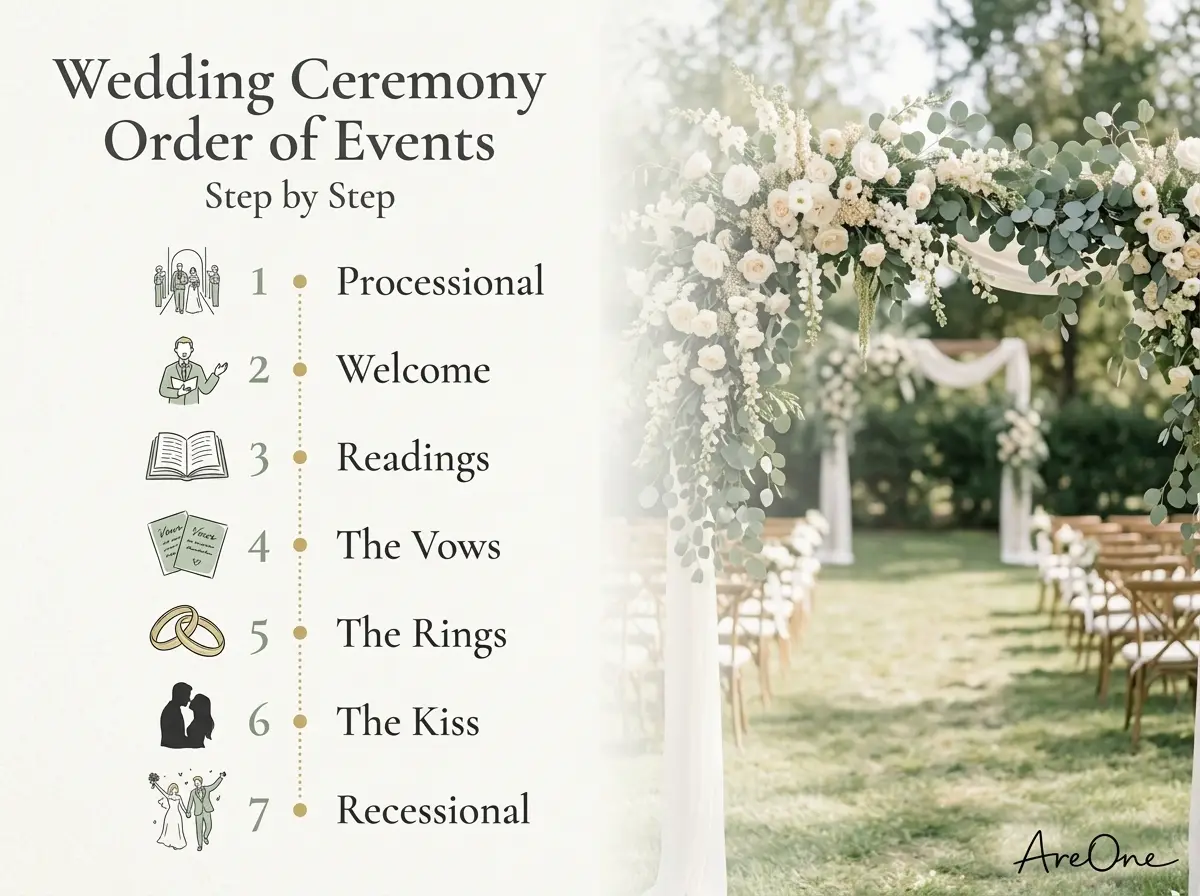
TL;DR: A typical wedding ceremony order of events runs processional, welcome, readings, vows, rings, unity ritual, pronouncement and recessional, and most of it fits into 20 to 30 minutes once you know who walks when.
Someone just asked who goes first, and the twenty minutes that matter most suddenly feel unplanned. This guide walks you through the wedding ceremony order of events from the first guest seated to your walk back up the aisle together. You get a minute-by-minute timeline table, classic and modern processional line-ups, the recessional, short notes on Catholic, Jewish, Hindu, Muslim and civil ceremonies, and a printable template.
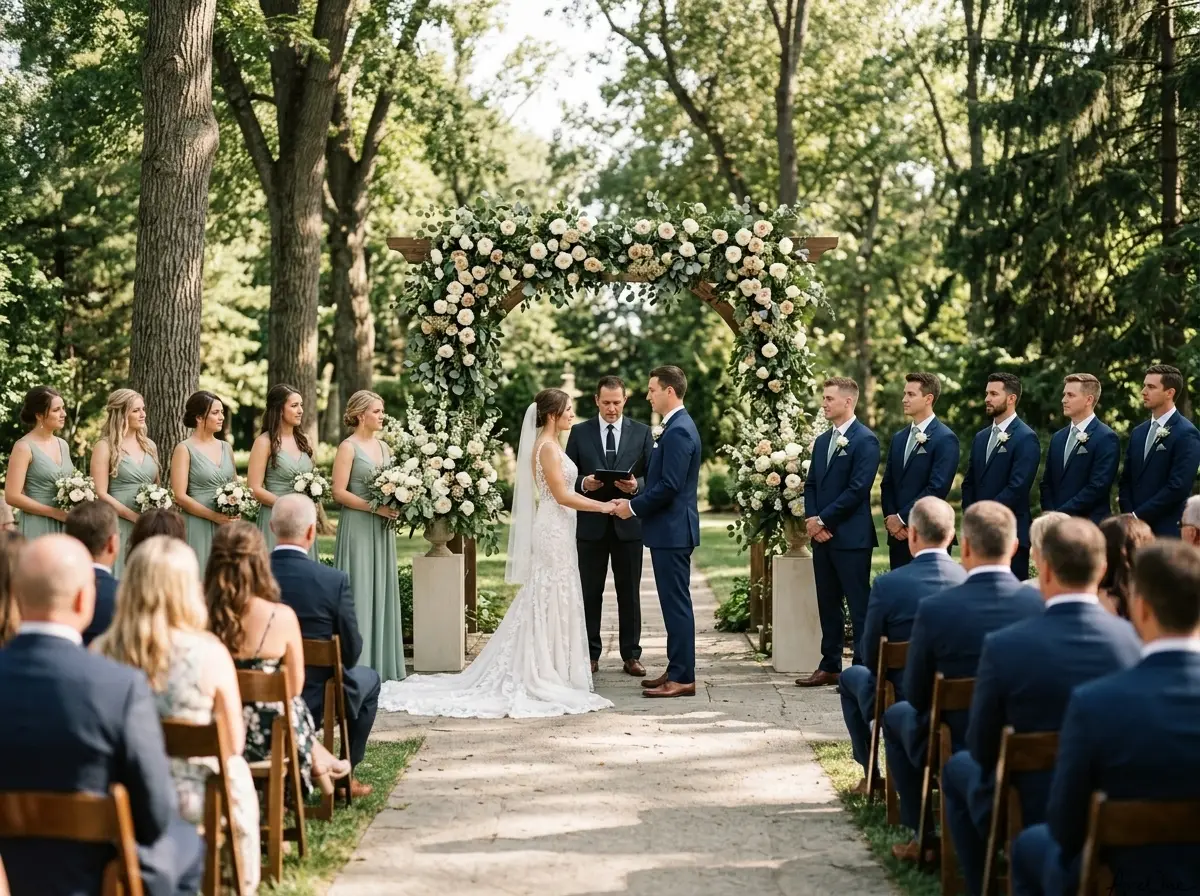
The ceremony at a glance: your wedding ceremony order of events in minutes
Think of the ceremony as short scenes, each with a cast and a running time. The table below shows a typical secular or lightly religious ceremony. Use it as your first draft, then stretch or trim each row with your officiant's advice.
The minutes are guide figures, not rules. A short reading takes about two minutes, and personal vows add a minute or two. Add the rows together and most couples land between 20 and 30 minutes.
| Step | What happens | Who is involved | Approx. minutes |
|---|---|---|---|
| 1. Prelude and seating | Guests arrive and are seated; ushers seat grandparents and parents last | Ushers, guests, family | 15 to 30 beforehand |
| 2. Processional | The officiant, family and wedding party enter, then the couple | Officiant, parents, attendants, children, couple | 3 to 6 |
| 3. Welcome | Opening words and the reason everyone is gathered | Officiant | 2 to 3 |
| 4. Readings | One or two readings, poems or blessings | Chosen readers | 2 to 6 |
| 5. Vows | The couple make their promises | Couple, officiant | 2 to 5 |
| 6. Ring exchange | Rings are presented and exchanged | Couple, ring holder | 1 to 3 |
| 7. Unity ritual (optional) | Candle, sand, handfasting or another symbol | Couple, sometimes family | 2 to 4 |
| 8. Pronouncement and kiss | The officiant declares you married | Officiant, couple | 1 |
| 9. Recessional | Everyone exits in reverse order | Couple, wedding party, family, officiant | 2 to 4 |
| 10. Signing (if not done privately) | The marriage licence or register is signed | Couple, witnesses, officiant | 3 to 5 |
How long is a wedding ceremony, really?
So, how long is a wedding ceremony in practice? A civil or nonreligious ceremony with one reading and short vows often lasts 15 to 25 minutes. A personalised ceremony with two readings, written vows and a unity ritual tends to sit around 30 minutes. A full religious service, such as a Catholic Nuptial Mass or a traditional Hindu ceremony, can run from about an hour to several hours.
When you share timings with guests, round up and tell them when to arrive, start and finish. Our guide to wording your wedding schedule for guests has ready-made lines for exactly this.
Processional order: who walks when
The processional is the part guests remember first, so rehearse it more than any other step. The principle is simple: attendants who will stand furthest from the couple walk first, and the couple comes last, so nobody squeezes past anyone.
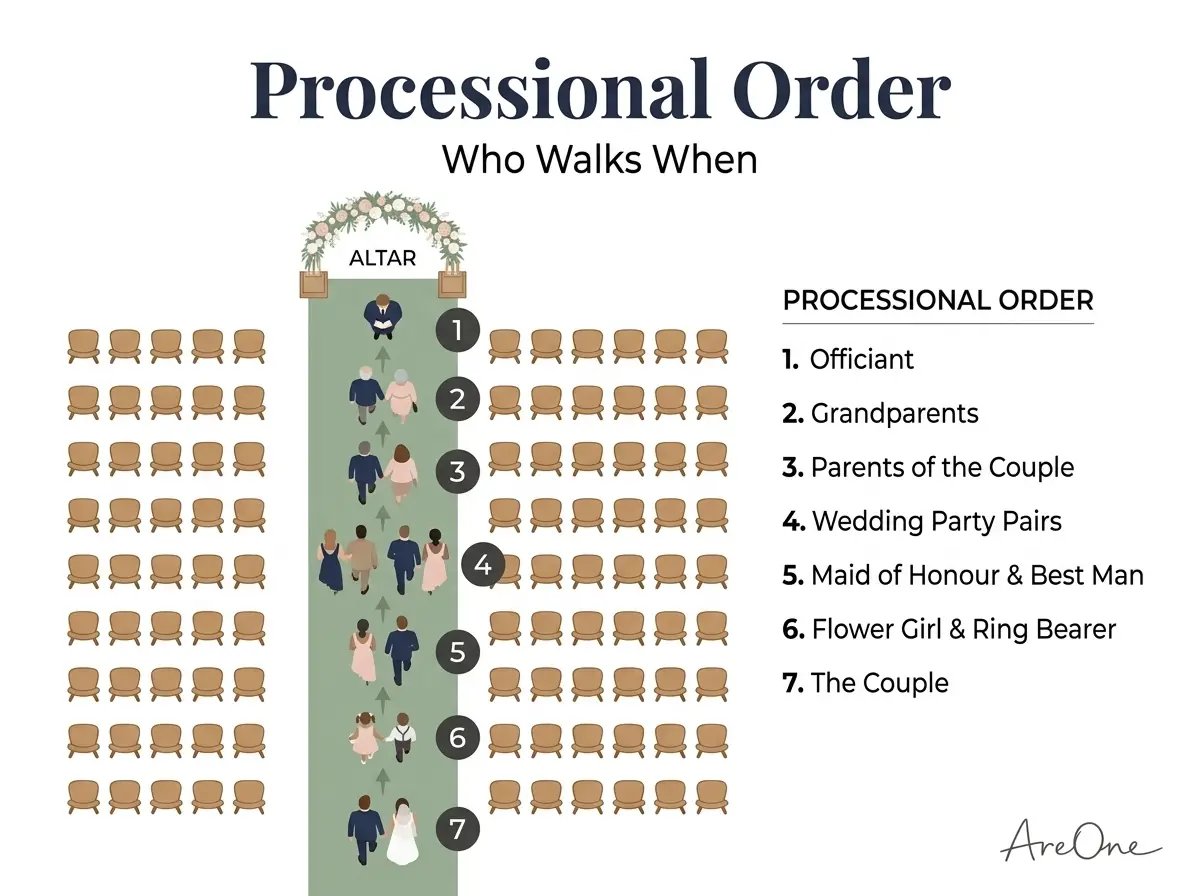
The Knot's guide to wedding processional order for different ceremonies shows how much this varies by faith and culture. Below are the three line-ups couples ask about most, starting with who walks down the aisle first.
Traditional wedding processional order
This is the line-up many guests expect at a Christian or classic Western wedding. Who walks down the aisle first? Usually the officiant, unless they are already waiting at the front.
- Grandparents and the groom's parents are seated, then the bride's mother is seated last. Her arrival signals that the ceremony is about to begin.
- The officiant takes their place, often from the side.
- The groom and best man enter, from the side or down the aisle.
- Groomsmen walk in singly or in pairs with bridesmaids.
- Bridesmaids follow, starting with the person who will stand furthest from the centre.
- The maid or matron of honour walks alone.
- The ring bearer and flower girl walk together or one after the other.
- The bride enters, traditionally escorted by her father, while guests stand.
Many couples adapt this wedding processional order freely; groomsmen might wait at the front, or the bride may walk alone.
Same-sex couples
For same-sex couples there is no single correct wedding processional order, which is good news because you can design the one that feels right. You can walk in together, use two aisles at once, or decide who walks down the aisle first and have the other partner follow with a parent.
Each partner's attendants can walk in pairs or enter as a group. Agree early which partner stands on which side, so photographers and readers know where to look. Our guide to the best wedding website sections shows how to explain plans like this to guests clearly.
Both parents escorting
Having both parents walk you down the aisle is a lovely, modern choice, and it has long been common in Jewish ceremonies. The usual wedding processional order stays the same until the final entry: instead of one escort, a parent walks on each side of you. Each partner can be escorted by both parents in turn.
Check the aisle width first. If three people side by side will not fit, one parent can walk slightly ahead.
Copy-paste: a who-walks-when note for your wedding party
Send a short note like this to everyone in the processional a week before the day. It works because it gives each person their number, partner and cue, so nobody has to guess. For a reminder of what each attendant does beyond the walk, the Emily Post Institute's page on wedding attendants is a helpful reference.
"Hi [Name]! Here is the processional plan for [Date]. Please be at the [Ceremony entrance] by [Time]. You are number [4], walking with [Partner name], straight after [Previous person]. Your cue is [Cue, for example the start of the second song]. Walk slowly, pause at the front, then step to the [left/right]. Thank you for being part of this. [Couple names]"
Recommended ReadingBilingual Invite Etiquette: Order, Typography, Names →Ceremony: welcome, readings, vows, rings, unity ritual, pronouncement
Once everyone is in place, the heart of the ceremony follows a dependable rhythm. Your wedding ceremony order of service might add a prayer, a moment of silence or a family blessing, but these building blocks appear in most ceremonies.
- Welcome. The officiant greets guests, invites them to sit and explains why everyone is gathered. Some couples add a remembrance of loved ones here.
- Readings. One or two readings set the tone. Choose confident readers and give them a large-print copy.
- Declaration of intent. The officiant asks whether each of you comes freely to marry. This is often where the "I do" lives.
- Vows. You repeat traditional vows or read personal ones. Agree a similar length so neither set overshadows the other.
- Ring exchange. The ring holder passes the rings forward, and you place them on each other's fingers with a short promise.
- Unity ritual. An optional symbolic act, such as lighting a unity candle, pouring sand, handfasting or planting a tree.
- Pronouncement and kiss. The officiant declares you married, invites the first kiss and presents you to your guests.
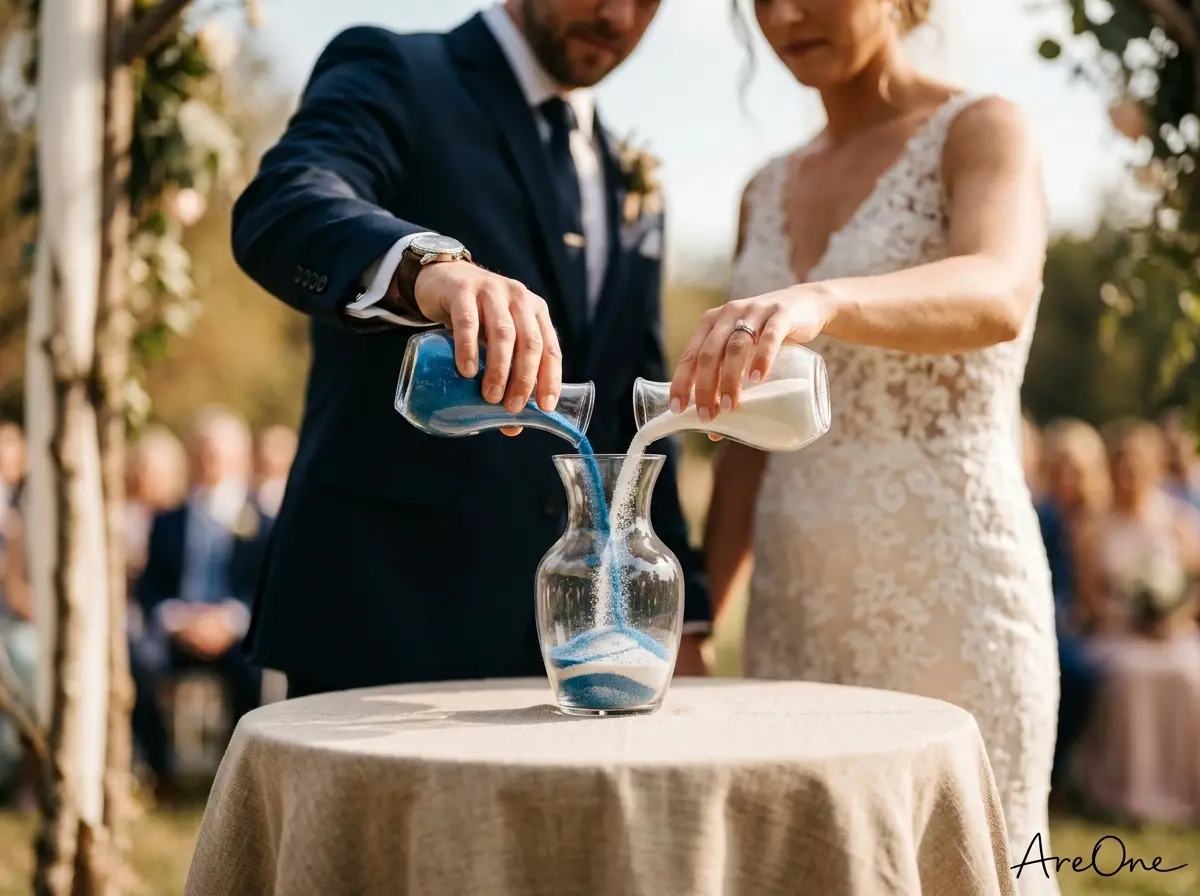
The exact words belong in your officiant's script and the printed running order in your ceremony programme, so write those once this sequence is fixed.
Recessional order
Browse invitation layouts that fit your plan.
Compare layouts for schedules, travel details, guest guidance, and RSVP information before choosing one for your invitation.



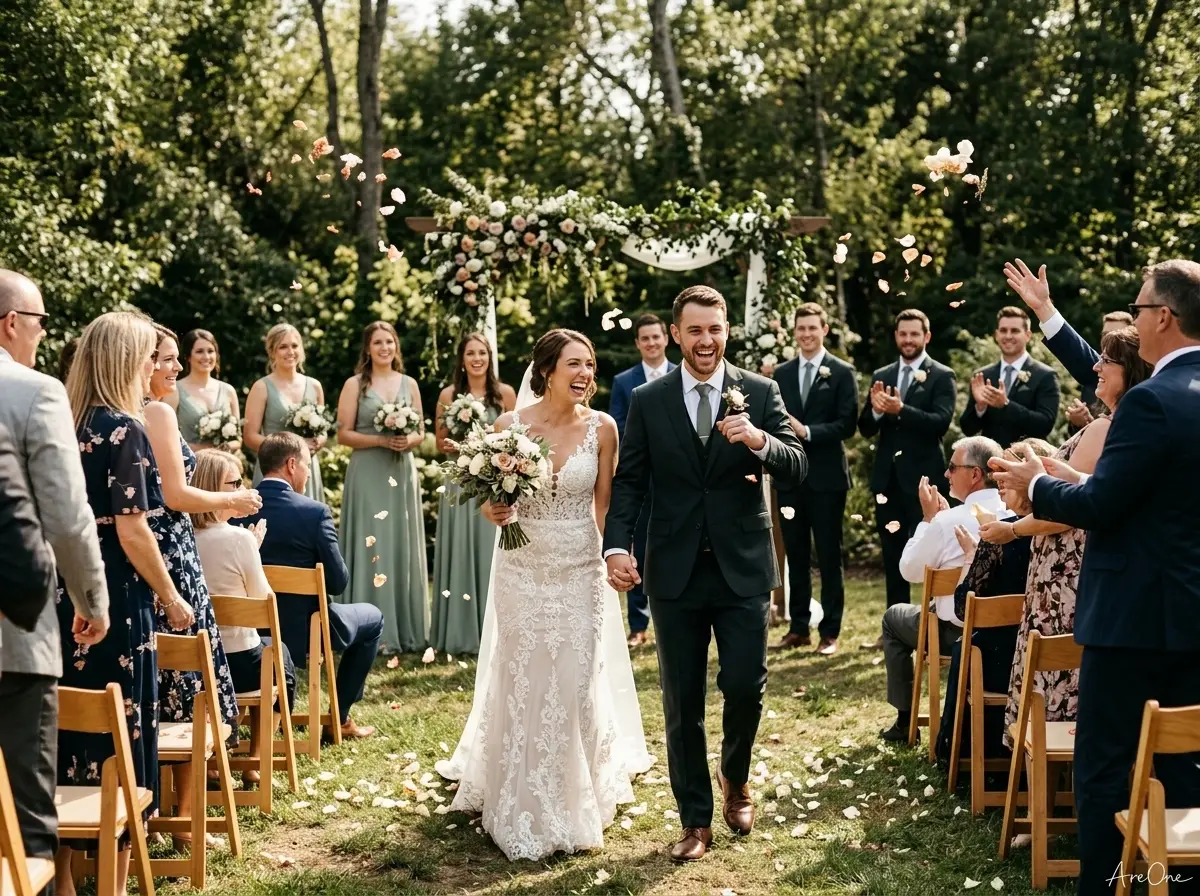
The recessional is the joyful exit, and it is simpler than the processional because it runs roughly in reverse. The newly married couple leads, and everyone else follows in pairs. The recessional order wedding guests usually see looks like this:
- The newly married couple
- Flower girl and ring bearer, if they are not already seated with family
- Maid or matron of honour and best man
- Remaining attendants in pairs, starting with those who stood closest to the couple
- Parents of one partner, then parents of the other
- Grandparents
- The officiant, unless they stay at the front to give instructions
Ushers then often release guests row by row from the front, which keeps the aisle calm. The Knot's wedding recessional guide covers how this changes for different types of ceremony.
Religious and cultural variations (Catholic, Jewish, Hindu, Muslim, civil)
Faith and family tradition can change the wedding ceremony order of events, the wedding ceremony order of service, its length and even who stands where. The notes below are short overviews. Practice varies widely between communities, regions and families, so always confirm the details with your officiant or religious leader.
Catholic
A Catholic wedding may take place within a Nuptial Mass, which often lasts about an hour, or in a shorter ceremony outside Mass. The priest, groom and best man frequently enter from a side door before the processional. The rite usually includes the Liturgy of the Word, the questions of consent, the exchange of vows and rings, the Universal Prayer and the Nuptial Blessing, with Communion when it is a full Mass.
Jewish
Many Jewish weddings begin with the signing of the ketubah, the marriage contract, and the bedeken, the veiling. Each partner is commonly escorted by both parents to the chuppah, the wedding canopy. The ceremony often includes circling, blessings over wine, the giving of a ring, the reading of the ketubah, the seven blessings and the breaking of a glass. Seating sides are often the reverse of Christian custom.
Hindu
Hindu ceremonies differ a great deal by region and family, and can last from about an hour to several hours. Common elements include the baraat, the groom's festive arrival, the jaimala garland exchange, the kanyadaan, where the bride's parents give her hand, and the saptapadi or pheras around a sacred fire. The mangalsutra and sindoor may follow.
Muslim
The nikah is often brief, sometimes 20 to 30 minutes. It usually includes a sermon, the agreed mahr (a gift from the groom to the bride), the offer and acceptance of marriage in front of witnesses, and the signing of the marriage contract. Seating customs vary by culture, and some families seat men and women separately. A walima celebration often follows.
Need a faster RSVP flow?
Use AreOne to collect guest replies, meal choices, and reminders in one clean workflow.
Civil
A civil ceremony is usually the shortest, at about 15 to 20 minutes. It centres on the legal declarations, the vows and the signing in front of witnesses. Rules differ by country and venue, so check your civil wedding ceremony order of service with your registrar or celebrant early.
Printable order-of-events template
Copy this template into a document, fill in the blanks, print it and hand it to your officiant, coordinator and wedding party. Keeping your wedding ceremony order of events on one page means it can be taped inside a door or slipped into a pocket.
| Time | Step | Who | Cue or note | Minutes |
|---|---|---|---|---|
| [Time] | Guests seated | Ushers: [Names] | Reserved rows for family | [30] |
| [Time] | Family seated | [Grandparents, parents] | Last parent seated = ceremony begins | [3] |
| [Time] | Processional | [Officiant, attendants, children] | [Song or cue] | [4] |
| [Time] | Couple enters | [Couple and escorts] | Guests stand | [2] |
| [Time] | Welcome | [Officiant] | Guests sit | [3] |
| [Time] | Reading | [Reader name] | [Title of reading] | [3] |
| [Time] | Vows | [Couple] | [Personal or traditional] | [4] |
| [Time] | Rings | [Ring holder] | [Who holds the rings] | [2] |
| [Time] | Unity ritual | [Couple, family] | [Candle, sand, handfasting] | [3] |
| [Time] | Pronouncement and kiss | [Officiant] | Cue recessional music | [1] |
| [Time] | Recessional | [Couple, then wedding party] | [Song or cue] | [3] |
| [Time] | Signing and announcements | [Witnesses] | [Where guests go next] | [5] |
Before you print, run through this quick checklist:
- Every name is spelt correctly.
- The total minutes match the time the venue has given you.
- Each processional entrant knows their number, partner and cue.
- Readers have large-print copies, and the ring holder knows when to step forward.
- Reserved seats are marked for family and anyone with mobility needs.
- Someone is responsible for the marriage licence or register paperwork.
Common mistakes couples make with the ceremony sequence
Even well-planned ceremonies stumble over the same few details. Here is how to sidestep them.
1. Skipping the rehearsal. The processional looks simple on paper, but spacing and pace only become clear when people actually walk. A ten-minute walk-through helps.
2. Forgetting where parents sit. Parents usually sit in the front row on their child's side, with grandparents just behind. With divorced or blended families, decide seating in advance and brief the ushers, so nobody is placed awkwardly on the day.
3. Underestimating the length. Ask yourselves honestly how long is a wedding ceremony going to take once people walk, readers get up and guests applaud. Couples often time only the vows. Add a two or three minute buffer.
4. Not telling guests the plan. Guests who do not know the start time or where to go afterwards arrive late or wander. Sharing the schedule on your invitation solves most of this before it happens.
Everything in good order: the final word
The best wedding ceremony order of events is the one that lets you stop watching the clock and start watching each other. Put the right people in the right places, give every step a few minutes, and the rest takes care of itself.
When the plan is ready, put it where guests will see it. AreOne digital invitations include online replies, a guest list and a shareable link, so your schedule travels with the invite. Our full wedding website product is coming soon.
Frequently Asked Questions
Find quick answers to common questions about this article.



No approved comments yet.