
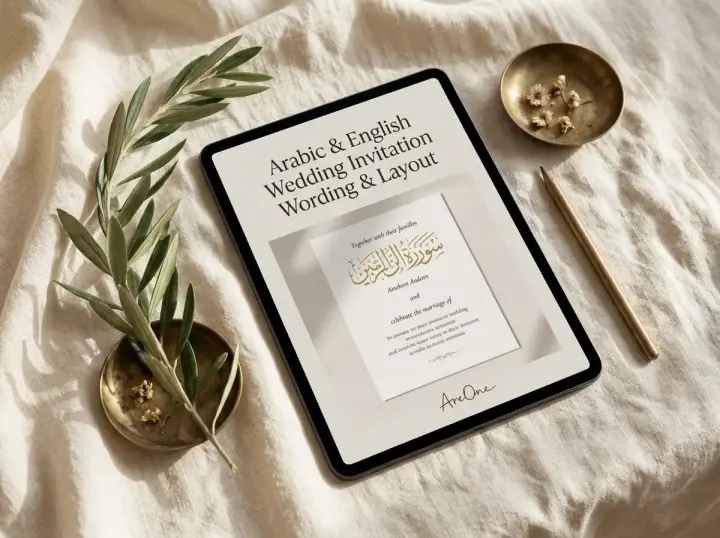
TL;DR: Crafting the perfect Arabic English wedding invitation wording ensures both sides of your family feel equally honored, combining elegant right-to-left typography with clear, modern communication.
The Magic of Merging Two Worlds
Planning a multicultural wedding invite brings two beautiful worlds together, but it also introduces unique logistical puzzles. When families merge across different cultures and languages, crystal-clear communication becomes paramount. Whether you are hosting a grand celebration in Dubai or an intimate gathering in New York, getting your Arabic English wedding invitation wording exactly right is essential. This is not just about direct translation; it is about honoring deep-rooted traditions, respecting your elders, and providing a seamless user experience for every single guest on your list.
Navigating the beautiful complexities of dual-language stationery requires careful thought and meticulous attention to detail. You want your bilingual wedding website and digital invites to reflect the rich tapestry of your combined heritage. From managing right-to-left formatting alongside left-to-right English text, to ensuring the tone and etiquette match perfectly in both dialects, there are several moving parts to manage.
We will walk you through precise wording examples, layout strategies, and cultural etiquette tips to ensure everyone feels warmly welcomed from the exact moment they open your digital invitation.
Who Needs Arabic English Wedding Invitation Wording?
Couples planning a multicultural wedding invite often wonder if dual-language formatting is necessary, or if it might just complicate the design process. If your guest list includes older relatives who predominantly speak Arabic, providing an invitation they can comfortably read is a profound sign of respect. It shows you value their presence and want them to understand the joyous details of your upcoming celebration without needing translation help from younger family members.
Another common scenario involves international destination weddings. If you currently live in an English-speaking country but are hosting your event in an Arabic-speaking region, dual languages help bridge a massive gap for guests traveling abroad. Your English-speaking friends will desperately need crucial travel logistics and venue details in their native tongue, while local vendors, extended family, and regional friends will appreciate the native Arabic text.
Even if the vast majority of your guests are functionally bilingual and can navigate English just fine, utilizing both languages honors the blending of your two unique families. It acts as a powerful symbolic representation of two distinct cultures coming together in perfect harmony. Creating a dedicated bilingual wedding website ensures that no one is left guessing about confusing dress codes, complex timelines, or obscure location logistics, paving the exact right path for a completely simpler event.
Essential UX Rules: Layout, Typography, and Visual Clarity
Designing an elegant invitation with two completely different scripts poses a fascinating, albeit tricky, design challenge. English naturally reads from left to right, while Arabic flows gracefully from right to left. This fundamental directional difference means you cannot simply copy and paste translated text without actively considering the guest's user experience (UX). Visual hierarchy must remain perfectly balanced so neither language feels like an afterthought or a secondary addition.
When building your digital presence, you must consider how the eye moves across the screen. You want both sets of readers to instantly find the date, time, and location without visual friction. This requires a smart approach to alignment, spacing, and structural formatting.
Typography Challenges: Mixing Right-to-Left and Left-to-Right
Finding visually complementary fonts is your first major task in this design journey. Traditional Arabic calligraphy is inherently artistic, featuring sweeping loops, delicate curves, and distinct baseline connections. Pairing it with a rigid, ultra-modern English font can often look jarring and disjointed. You want typography that shares a strikingly similar visual weight and level of formality. If you choose a flourishing, romantic Arabic script, be sure to pair it with an elegant English cursive script or a soft serif font.
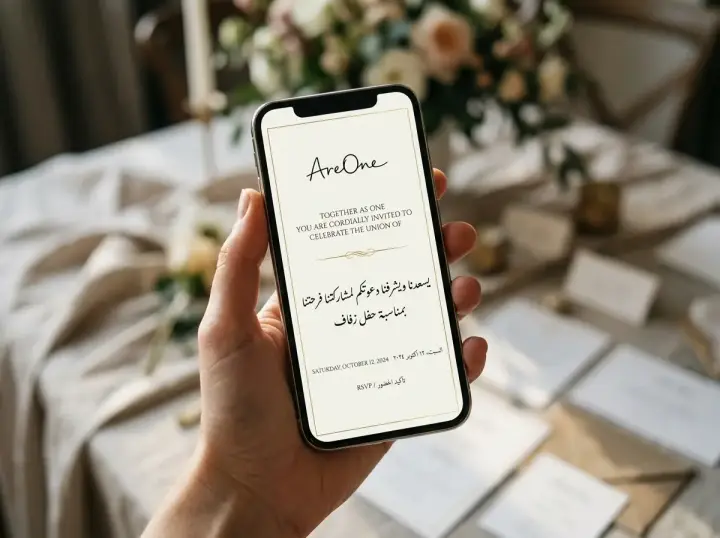
Line height and vertical spacing also require meticulous, detailed attention. Arabic text frequently requires far more vertical space (known as leading) because of its intricate ascenders and descenders. If you force the English and Arabic text into the exact same constrained line heights, the Arabic characters might look severely cramped or get cut off at the edges. Always thoroughly test your digital previews across multiple devices to ensure complete legibility.
Layout Options: Side-by-Side vs. Stacked vs. Language Toggle
When physically structuring your bilingual wedding website and digital invites, you generally have three primary layout choices to consider. The side-by-side method places English on the left and Arabic on the right (or vice versa). This works beautifully for large printed pieces or wide desktop computer screens, maintaining equal visual importance. However, on mobile devices, these side-by-side columns almost always become far too narrow to read comfortably.
The stacked approach places one language directly above the other in a vertical format. This is effective for mobile-first digital invites. You might place the elegant Arabic text first, followed by a beautiful minimalist divider, and then the English translation below it. It keeps the overall design wonderfully clean and ensures the text remains large and legible on small smartphone screens.
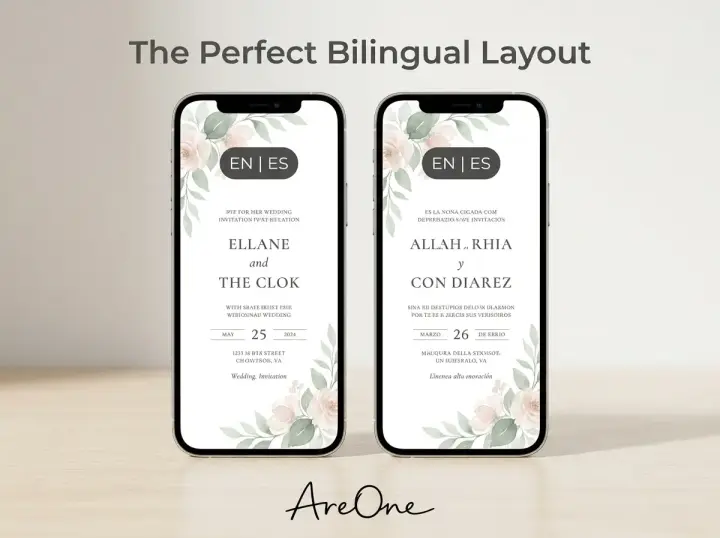
The ultimate modern solution is the interactive language toggle. Using advanced digital platforms like AreOne, you can build a dynamic invitation where guests simply select their preferred language immediately upon opening the link. This brilliantly prevents visual clutter and provides a personalized, tailored experience. For deep insights on properly structuring these interactive digital layouts, read our comprehensive guide on multilingual wedding website UX rules.
The Ultimate Translation Checklist for Multicultural Wedding Invites
Directly translating your elegant invitation through a basic automated web app is a guaranteed recipe for awkward phrasing and severe cultural faux pas. Wedding etiquette carries distinct emotional tones in Arabic that simply do not have direct English equivalents, and vice versa. To ensure absolute accuracy and maintain proper respect, you need a meticulous translation checklist before hitting send.
Here is your essential checklist for verifying your bilingual text:
- Names of the Couple: Ensure the spelling is perfectly phonetic and accurate in both alphabets. Double-check that the specific name order firmly aligns with cultural expectations.
- Parents' Names: In many Middle Eastern cultures, honoring parents prominently on the invitation is absolutely non-negotiable. Verify that formal titles and traditional honorifics are appropriately and respectfully translated.
- Dates and Times: Arabic and English regions often format calendar dates differently. Ensure you clearly specify the exact day of the week, the Gregorian calendar date, and potentially the Hijri calendar date if it is culturally relevant to your family.
- Venue and Addresses: Provide the exact venue name in English for easy GPS mobile navigation, while offering clear, descriptive directional context in Arabic for older local guests who know the area differently.
- Dress Code: Translation nuances matter tremendously here. A phrase like Black Tie might need a more descriptive explanation in Arabic rather than a literal translation to ensure older guests truly understand the required formality.
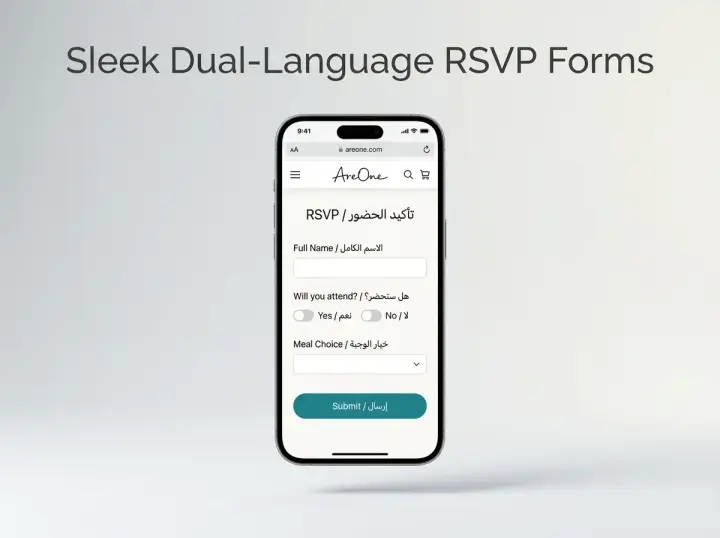
- RSVP Instructions: Clearly and warmly state exactly how to reply in both languages. Link directly to your digital RSVP system so guests can respond effortlessly without confusion.
For a much broader overview on managing dual-language stationery from the very start of your planning to the final send, explore our guide to clear, elegant bilingual wedding invitations.
Structural Components: Breaking Down the Bilingual Wedding Website
Your digital invitation is just the beautiful beginning. The comprehensive digital hub where guests find all your crucial wedding details must also cater to dual languages and intuitively. Organizing a robust bilingual wedding website requires crystal clear compartmentalization of critical information. You desperately want guests to find exactly what they need without scrolling endlessly through blocks of text they cannot read.
Using a structured, modular approach drastically helps manage the heavy load of logistical information. You must curate the tone and the content style to fit the specific audience reading it. Below is a detailed comparison table showcasing exactly how different elements of your wedding website should be thoughtfully handled across both languages.
| Website Section | English Strategy | Arabic Strategy | Key Consideration |
|---|---|---|---|
| Our Story | Conversational, fun, and highly romantic tone. | Poetic, warm, highly respectful, and family-centric phrasing. | Keep both versions reasonably concise to cleverly prevent endless mobile scrolling. |
| Schedule of Events | Clear, brief timelines (e.g., 5:00 PM Arrival). | Use 24-hour clocks or very clear evening/morning descriptive markers. | Ensure highly specific cultural pre-wedding events are explained clearly to outsiders. |
| Travel & Accommodations | Direct links to hotel blocks and modern flight details. | Clear instructions for local transport, parking, or complex visas. | Provide localized Google Map links for significantly easier street navigation. |
| Registry / Gifts | Direct links to online retail registries or honeymoon funds. | Extremely polite, culturally sensitive phrasing regarding gifts or cash. | Deeply respect local cultural norms around asking for or receiving gifts. |
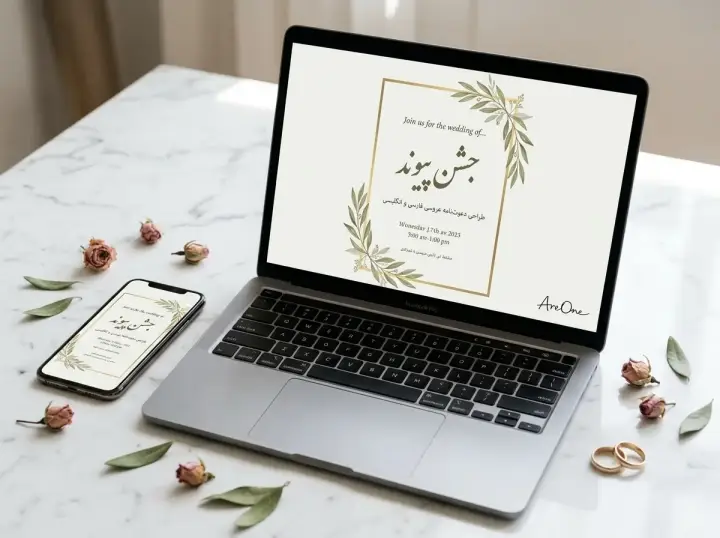
When actively building your site, choose software platforms that natively support complex characters and right-to-left reading directions. Take a moment to browse our modern templates, uniquely designed specifically to handle elegant right-to-left script without ever breaking the visual layout.
Recommended ReadingBilingual Invite Etiquette: Order, Typography, Names →Copy-Paste Arabic English Wedding Invitation Wording Examples
Writing the actual text is quite often the most intimidating part of the entire bilingual planning process. You want to sound gracious and celebratory while providing crystal clear logistical details. To actively save you valuable time, we have expertly crafted several Arabic English wedding invitation wording examples that you can easily adapt, tweak, and use for your own beautiful celebration.
Example 1: Traditional and Highly Formal
This specific option is perfect for formal affairs that are primarily hosted by the parents, honoring ancient roots and showcasing immense respect for elders.
English Version:
Mr. and Mrs. Tariq Al-Fayed
request the honor of your presence
at the marriage of their daughter
Layla Al-Fayed
to
Omar Hassan
son of Mr. and Mrs. Kareem Hassan
Saturday, the twelfth of October, two thousand and twenty-six
at six o'clock in the evening
The Plaza Hotel, New York City
Reception to follow.
Arabic Version:
يتشرف السيد والسيدة طارق الفايد
بدعوتكم لحضور حفل زفاف ابنتهم
ليلى الفايد
على الشاب
عمر حسن
نجل السيد والسيدة كريم حسن
وذلك يوم السبت الموافق الثاني عشر من أكتوبر لعام ألفين وستة وعشرين
في تمام الساعة السادسة مساءً
فندق البلازا، مدينة نيويورك
وعقبال عندكم في المسرات.
Why this works so beautifully: It maintains the lofty, respectful tone strictly required by older generations. The elegant Arabic phrasing includes traditional, warm well-wishes at the very end, which is a glorious hallmark of legendary Middle Eastern hospitality.
Example 2: Modern and Casual (Hosted by the Couple)
Browse invitation layouts that fit your plan.
Compare layouts for schedules, travel details, guest guidance, and RSVP information before choosing one for your invitation.



For younger couples enthusiastically hosting their own contemporary celebration, the phrasing can be much lighter, breezier, and far more direct. This modern multicultural wedding invite style comfortably skips the heavy traditional formalities and focuses on the joyous celebration of love.
English Version:
Together with their families
Layla & Omar
invite you to celebrate their wedding day!
Join us for a magical evening of love, laughter, and dancing.
Saturday, October 12, 2026 | 6:00 PM
The Plaza Hotel, New York City
Dinner and dancing to follow.
Arabic Version:
بقلوب يملؤها الحب، وبمشاركة عائلتيهما
ليلى وعمر
يدعوانكم لمشاركتهما فرحة زفافهما!
انضموا إلينا في أمسية مليئة بالحب والضحك والاحتفال.
السبت، 12 أكتوبر 2026 | 6:00 مساءً
فندق البلازا، مدينة نيويورك
يليه عشاء ورقص.
Why this effectively works: It gets straight to the fun point while successfully retaining an immense amount of warmth. The subtle Arabic text translates 'Together with their families' quite beautifully, maintaining vital respect for the parents without explicitly making them the official financial hosts.
Example 3: Short, Sweet, and Digitally Focused
When securely sending digital invitations via fast apps like WhatsApp or direct text message, brevity is crucial. Your guests are likely reading your message on the go, so you must communicate the bare essentials instantly before pointing them to your website.
English Version:
Layla & Omar are getting married!
10.12.2026 | 6 PM | New York City
Tap the secure link below for full details and to RSVP.
Need a faster RSVP flow?
Use AreOne to collect guest replies, meal choices, and reminders in one clean workflow.
Arabic Version:
ليلى وعمر يتزوجان!
12 أكتوبر 2026 | 6 مساءً | مدينة نيويورك
اضغط على الرابط أدناه للتفاصيل وتأكيد الحضور.
Why this strategically works: It successfully minimizes frustrating screen scrolling and relies on the attached link to deliver the heavy, complex logistical information. It serves as the perfect, friendly introductory hook for a comprehensive digital wedding hub.
4 Common Cultural Pitfalls to Avoid
Even with the absolute best intentions, attempting to blend two distinct cultures can occasionally lead to minor missteps. Expertly navigating these sensitive areas requires a very keen understanding of both social expectations and software design limitations. Let us look closely at four common mistakes couples accidentally make when designing their bilingual wedding website.
1. Relying on Machine Translation: We cannot stress this critical point enough. Basic automated translation tools simply do not understand emotional nuance, complex gendered grammar, or specific cultural idioms. A machine might poorly translate 'Reception to follow' literally into something that sounds strange or coldly transactional in Arabic. Always have a trusted native speaker rigorously review your final Arabic English wedding invitation wording. For reliable etiquette advice, consult authoritative, well-researched sources like The Knot's etiquette guides.
2. Disrespecting the Name Hierarchy: In many traditional Arabic cultures, proudly placing the bride's name before the groom's is standard practice on the bride’s side of the family, while the groom's proud side might strictly expect the reverse. Alternatively, some modern couples simply prefer strict alphabetical order. Whatever you choose, ensure it is a conscious decision rather than an accidental formatting oversight that might unfortunately offend traditional family members. Read more about carefully balancing traditional wording structures at Brides.com.
3. Ignoring Right-to-Left Alignment Bugs: Many basic, cheap website builders heavily struggle with proper right-to-left text alignment. They might awkwardly force beautiful Arabic text to align strictly to the left, which makes it difficult and unnatural to read. essential punctuation like commas and periods often end up trapped on the wrong side of the sentence. When you review our affordable pricing tiers, note carefully that our advanced system natively supports flawless RTL formatting.
4. Cluttering the Visual Design: Frantically trying to fit full English and full Arabic text onto a single, small physical card can easily lead to overwhelmingly tiny font sizes. If you are printing physical cards, strongly consider printing English neatly on the front and Arabic cleanly on the back. For digital invites, actively utilize smart language toggle features to ensure the lovely design breathes properly and the typography remains stunningly elegant and easily readable.
Navigating Mixed-Language Households
Addressing digital envelopes and carefully formatting digital deliveries for diverse households where one partner speaks mostly English and the other speaks mostly Arabic requires immense tact. You want to honor both individuals without clumsily sending two completely separate invitations to the same household.
Using a smart, responsive bilingual wedding website elegantly ensures that once they warmly open the provided link, they can read the romantic content in whatever language they personally prefer. It is the absolute ultimate modern courtesy for your beloved guests.
When writing the outer digital envelope or the initial friendly text greeting, strongly consider using both languages simply for the display names. For example, writing the distinct names in English on one line, and the precise Arabic equivalent immediately below it. It creates an immediate, welcoming visual impact that brilliantly sets a warm tone.
Creating a Truly Inclusive Guest Experience
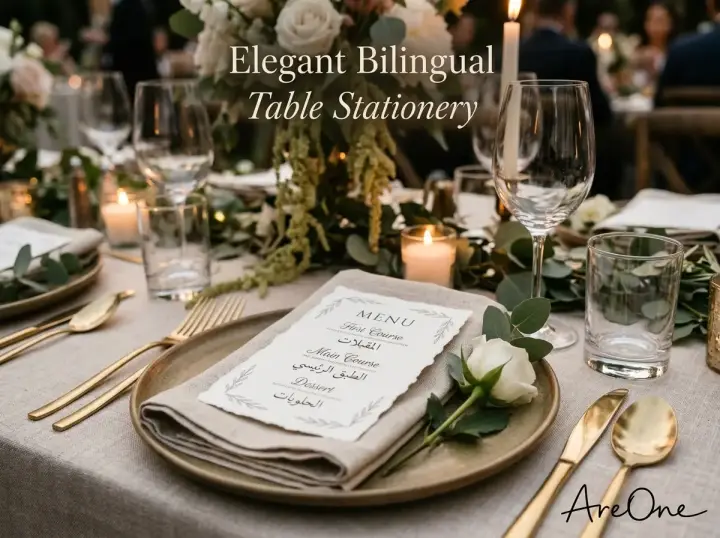
This wonderfully inclusive mindset should naturally extend far beyond the initial digital invitation. Consider carefully how you can incorporate thoughtful bilingual elements consistently throughout the actual wedding day itself. Dual-language elegant welcome signs, bilingual printed ceremony programs, and dinner menus printed flawlessly in both languages flawlessly continue the beautiful theme of cultural unity.
Modern technology makes this incredible level of deep personalization significantly easier than ever before. You no longer need to spend an absolute fortune printing two different sets of heavy, expensive cardstock invitations. By smartly leveraging intuitive digital tools, you can and joyfully guide international relatives and local friends through the entire RSVP process.
Translating Your Love Story: Mastering Your Wording
Crafting the absolute perfect Arabic English wedding invitation wording certainly does not have to get lost in translation. By brilliantly blending thoughtful UX design with culturally respectful, warm phrasing, you create a breathtakingly beautiful preamble to your biggest day. Let your elegant digital invites speak massive volumes about the beautifully unified, vibrant future you are building wonderfully together.
Frequently Asked Questions
Find quick answers to common questions about this article.

No approved comments yet.