
TL;DR: Managing modern wedding etiquette for blended families requires open communication, clear boundaries, and flexible invitation wording to ensure everyone feels respected and celebrated.
Planning a wedding is a joyous milestone, but when you are trying to merge different family dynamics, it can sometimes feel like walking a tightrope. You are not alone in this feeling. Many couples face unique challenges when organizing their big day around intricate relationships. Finding the right balance between honoring traditions and respecting individual feelings is essential.
You might be wondering how to seat divorced parents, or how to phrase your digital invites without hurting feelings. Fortunately, modern wedding etiquette for blended families is adaptable. It prioritizes emotional comfort and practical solutions over rigid, outdated rules. We believe your celebration should reflect your love story, free from unnecessary stress or family friction.
By using modern tools and thoughtful communication, you can host a beautiful, drama-free event.
Understanding Modern Wedding Etiquette for Blended Families
The concept of family has evolved beautifully over the years. Gone are the days when a cookie-cutter approach applied to every celebration. Now, a wedding often brings together step-parents, half-siblings, and chosen family members. This rich tapestry of loved ones makes your day special, but it also requires a nuanced approach to planning.
Modern etiquette is no longer about strict protocols written decades ago. Instead, it revolves around respect, clarity, and inclusivity. Your primary goal is to ensure that everyone feels welcome and valued. When you approach your planning with empathy, you diffuse tension before it even begins. It is perfectly fine to adjust traditions to fit your unique situation.
For instance, traditional rules might dictate that the bride's parents pay for the wedding and exclusively host the event. However, when multiple sets of parents or step-parents are contributing, those rules no longer make sense. Acknowledging everyone's contribution and presence is a cornerstone of modern event planning.
Using a flexible platform like AreOne allows you to customize your communication seamlessly. You can build a personalized digital experience that honors all sides of your family without the space constraints of traditional paper stationery.
Mastering Invitation Wording for Divorced Parents
One of the most common stressors couples face is how to write their invitations when parents are separated or remarried. The way you phrase your invites sets the tone for the entire event. It acts as the first impression your guests will receive. Wedding invitations for divorced parents should be crafted carefully to avoid any perceived slights.
The beauty of digital invitations is that you are not limited by the size of a piece of paper. You have the freedom to list names clearly and beautifully. When dealing with step-parents or varied financial contributors, transparency and equality are your best friends. Always place names on separate lines to denote different households, which prevents confusion.
Below, we have prepared several wording options for different family scenarios. These are designed to be respectful, elegant, and customizable. You can easily adapt these templates when you browse our modern templates to find your perfect design.
Example 1: Amicably Divorced Parents Co-Hosting
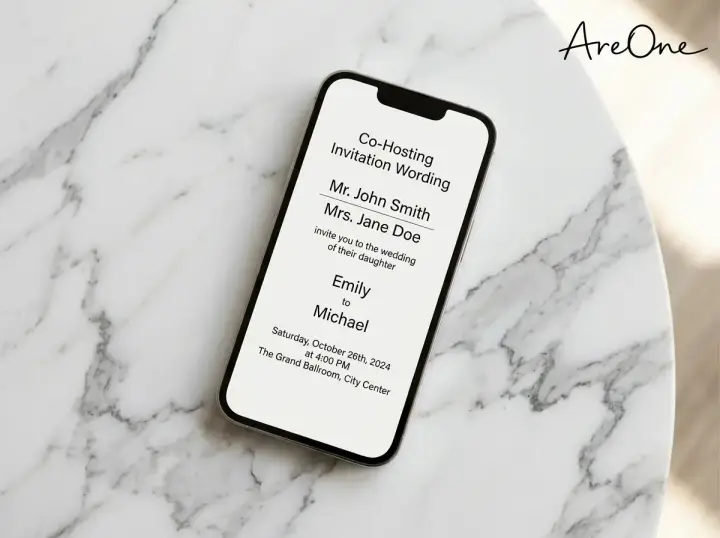
When your parents are no longer together but are amicably splitting the costs and hosting duties, you want to honor them equally. The rule of thumb here is to keep their names on separate lines without the word 'and' between them. The word 'and' traditionally implies marriage.
Copy-Paste Example:
Eleanor Vance
William Vance
request the pleasure of your company at the marriage of their daughter
Sarah Vance
to
James Miller
[Date, Time, Location]
This wording works perfectly because it gives equal billing to both parents while respecting their separate lives. It is a graceful nod to their united support for your union, keeping the focus positive and celebratory.
Example 2: One Parent and a Stepparent Hosting
Sometimes, one parent and their new spouse take on the primary financial and hosting responsibilities. In this scenario, it is polite to list the hosting couple at the top. If you still want to include the non-hosting parent, you can do so later in the invitation or within the digital wedding program.
Copy-Paste Example:
Mr. and Mrs. Robert and Diane Smith
request the honor of your presence
at the marriage of her daughter
Emily Clark
to
Michael Johnson
[Date, Time, Location]
This approach clearly outlines who is hosting while maintaining a warm, welcoming tone. It eliminates ambiguity and sets clear expectations for your guests from the moment they open their digital envelope.
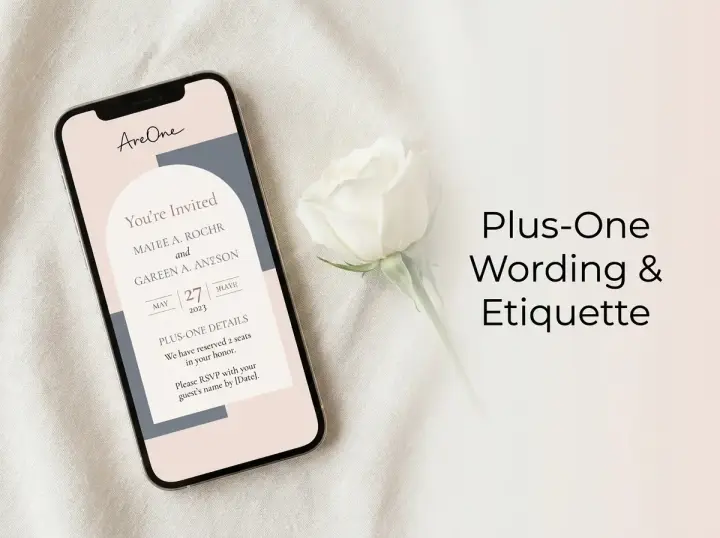
Recommended ReadingPlus‑One Wording: “And Guest” Etiquette & Examples →Example 3: The Couple Hosting with Family Blessings
If you and your partner are paying for the wedding yourselves, or if listing all the parents and step-parents becomes too convoluted, the simplest route is often the best. Hosting the event yourselves allows you to bypass the complex hierarchy of names entirely.
Copy-Paste Example:
Together with their families
Jessica Williams
and
David Chen
joyfully invite you to celebrate their marriage
[Date, Time, Location]
Browse invitation layouts that fit your plan.
Compare layouts for schedules, travel details, guest guidance, and RSVP information before choosing one for your invitation.



Using 'Together with their families' is a staple of blended family wedding wording. It is universally inclusive. It honors every single parent, step-parent, and grandparent without ranking them. This is an popular choice among couples seeking a simpler, modern approach.
Handling Complex Guest List Etiquette with Grace
Drafting the guest list is notoriously difficult, and a blended family adds an extra layer of complexity. You might be navigating estranged relatives, feuding siblings, or step-families who have never met. The key to complex guest list etiquette is setting firm boundaries early and sticking to them.
First, decide on your plus-one policy. Will you only invite established couples, or does everyone get a guest? Whatever you choose, apply the rule uniformly across all sides of the family. Inconsistency is what breeds resentment. If Aunt Mary cannot bring her new boyfriend, Uncle John should not be allowed to bring a casual date either.
Digital platforms can be a lifesaver here. By utilizing smart RSVP tracking tools, you can control exactly who is allowed to RSVP. You simply link the guest's name to a specific party size. They cannot physically add uninvited guests to the digital form, which saves you from awkward phone calls and budget blowouts.
The Seating Chart Dilemma: Strategies for Peace
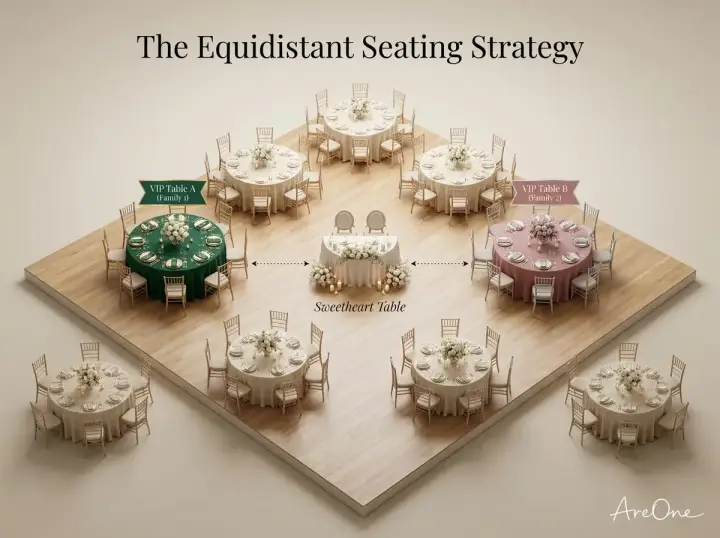
The reception seating chart is where family dynamics become visible. If you have divorced parents who do not get along, seating them requires tact and strategy. You want to avoid placing them at the same table, but you also cannot place one at a 'better' table than the other.
According to experts at Brides, creating a balanced floor plan is crucial for maintaining harmony. One effective strategy is the 'equidistant' method. You place both parents at tables that are equally close to the couple, but on opposite sides of the room or dance floor.
Here is a helpful breakdown of different seating strategies you can employ to maintain the peace during your dinner service.
| Seating Strategy | Best Used For | How It Works |
|---|---|---|
| Traditional Head Table | Harmonious, small bridal parties | The couple sits with the bridal party. Parents host their own separate tables of extended family and friends nearby. |
| Sweetheart Table | Tense family dynamics | The couple sits alone at a small table. Both sets of parents are given their own separate VIP tables of equal status. |
| Mixed Family Tables | Amicable blended families | Parents and step-parents sit together at a large communal table, showing a united front of support for the couple. |
| Symmetrical VIP Tables | Divorced parents who need distance | Create two or more VIP tables equally close to the couple. Assign one parent to each, surrounded by their respective side of the family. |
Remember, the goal of the seating chart is to make sure everyone enjoys their meal comfortably. Do not be afraid to break tradition and place people where they will be the happiest.
[Insert Image Here: An elegant reception hall with beautifully decorated round tables. Alt text: Planning seating charts as part of modern wedding etiquette for blended families.]
Common Mistakes Couples Make with Complex Guest Lists
Need a faster RSVP flow?
Use AreOne to collect guest replies, meal choices, and reminders in one clean workflow.
Even with the best intentions, couples can stumble when handling family drama at weddings. Recognizing these pitfalls before you send your invitations is the secret to a smooth planning process. Here is a deep dive into four common mistakes and how to avoid them.
1. Forcing the Picture-Perfect Moment
Many couples dream of a single, massive family portrait featuring every parent and step-parent smiling together. If your families have a history of tension, forcing them into a tight space for photos is a recipe for disaster. Instead, schedule separate photography sessions. Have a dedicated time for the bride's mother's family, the bride's father's family, and so on. This respects their boundaries and guarantees genuine smiles in your album.
2. Being Ambiguous with Plus-Ones
Vague addressing leads to guest confusion. If you address an envelope to 'The Smith Family,' guests might assume their adult children or casual partners are invited. Be specific. Address your digital invites directly to the individuals invited, such as 'Mr. John Smith and Ms. Jane Doe.' Utilizing an ultimate invitation wording guide can help you lock down this specific language.
3. Over-Explaining Your Choices
You do not owe anyone a lengthy justification for your guest list or seating arrangements. If you decide not to invite an estranged relative, a simple, firm statement is enough. Saying, 'We have finalized our guest list and cannot accommodate any additions,' is polite and definitive. Over-explaining opens the door for negotiations, which you want to firmly shut.
4. Ignoring the Seating Chart Until the Last Minute
Procrastination is your worst enemy when dealing with complex family trees. Leaving the seating chart until the week before the wedding will cause immense anxiety. Start drafting your floor plan as soon as your RSVPs start rolling in. This gives you ample time to consult with your venue or wedding planner about creative layout solutions if a conflict arises.
Your Blended Family Communication Checklist
Clear, proactive communication is the foundation of excellent etiquette. Before you launch your wedding website or send out your save-the-dates, make sure you have covered these essential conversational bases with all involved parties. A little bit of prep work goes a very long way.
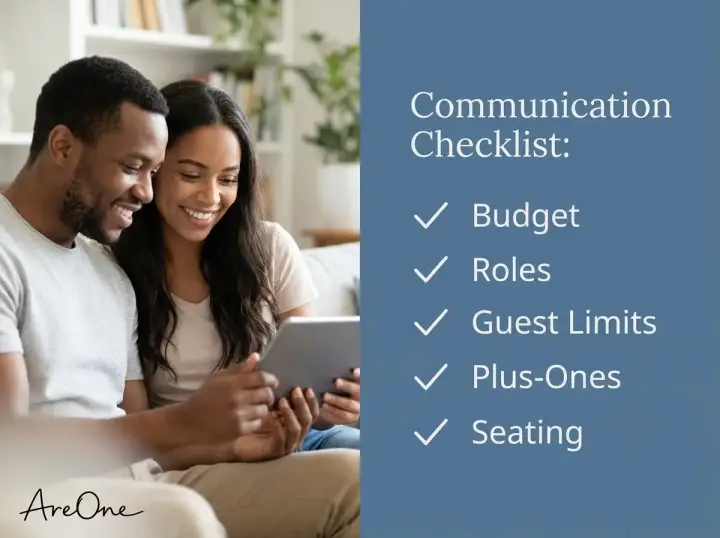
Follow this checklist to ensure you are setting the right expectations from day one:
- Establish the budget clearly: Have private, individual conversations with anyone offering to contribute financially. Ensure they understand what their contribution covers.
- Discuss traditional roles early: Ask your parents how they envision their involvement. Do they want to walk you down the aisle? Do they want to give a toast? Manage these expectations gently.
- Share the guest list limits: Be transparent about venue capacity. Give each set of parents a strict number of guests they are allowed to invite.
- Finalize plus-one rules: Agree on a plus-one policy with your partner and communicate it firmly to the families so there are no surprises.
- Review the seating plan: Once drafted, discreetly run the seating chart by key family members to ensure there are no hidden grievances you missed.
For additional insights on managing guest expectations, authoritative sources like The Knot offer wonderful advice on floor plan logistics and relationship management.
Crafting a Beautiful New Chapter
Your wedding is the beautiful intersection of your past, present, and future. Navigating modern wedding etiquette for blended families is much like a successful marriage itself—it requires patience, a lot of love, and the courage to rewrite the rules. By prioritizing clear communication, utilizing smart digital tools, and maintaining strong boundaries, you can curate an atmosphere of genuine joy.
Embrace the uniqueness of your family structure. When you focus on inclusivity and respect, your guests will feel that warmth. You deserve a day that is focused on celebrating your love story, surrounded by the people who cherish you the most. Take a deep breath, trust your instincts, and enjoy every moment of this incredible journey.
Frequently Asked Questions
Find quick answers to common questions about this article.

No approved comments yet.