
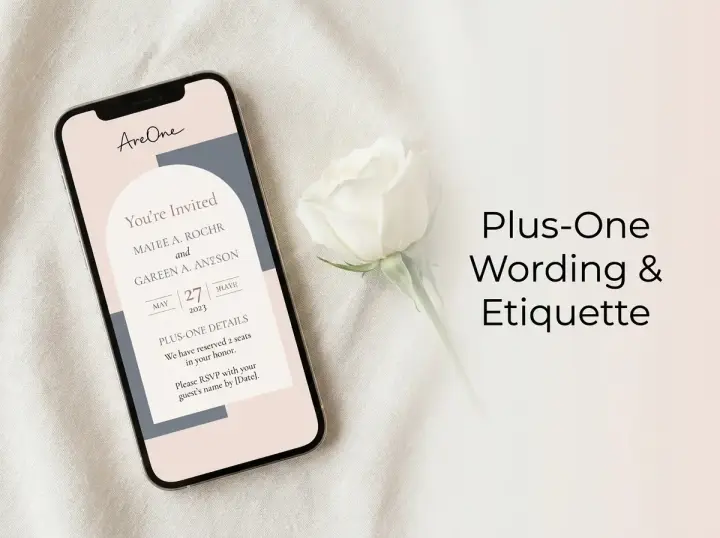
TL;DR: Mastering your plus one wording ensures your guests feel welcome while keeping your guest list, budget, and RSVP process completely simpler.
Navigating Your Guest List with Confidence
Planning your dream day is thrilling, but figuring out your guest list can sometimes feel like solving a complex puzzle. Getting your plus one wording exactly right is the secret to avoiding awkward conversations, preventing unexpected additions to your headcount, and maintaining your peace of mind. It sets a clear boundary while still treating your loved ones with warmth and respect.
Many couples worry about offending friends or family members when restricting plus-ones. However, clear communication is actually the kindest approach. When your guests know exactly what to expect, they can plan accordingly. Proper wedding invitation wording eliminates the guesswork for everyone involved.
In this guide, we will walk you through the nuances of inviting guests with a plus-one, offering practical solutions and actionable advice. From understanding basic etiquette to exploring versatile templates, you will find everything you need to communicate your wishes gracefully.
When to Use This Wording: Context and Etiquette
Understanding exactly when and why to offer a plus-one is the foundation of excellent wedding invitation etiquette. Your venue capacity and your catering budget are usually the strict deciding factors. You simply cannot accommodate everyone, and that is perfectly okay.
Traditionally, etiquette experts agree that anyone who is married, engaged, or living with a partner should be invited as a couple. This means addressing the invitation to both individuals by name, rather than simply writing 'and guest'. This personal touch demonstrates respect for their relationship.
For single friends or those in casual relationships, the rules are much more flexible. You get to decide whether your budget allows for open plus-ones. If you do choose to offer them, your phrasing needs to be completely unambiguous. Vague phrasing often leads to guests assuming they can bring a friend, a sibling, or a new date without checking with you first.
Identifying Who Actually Gets a Plus One
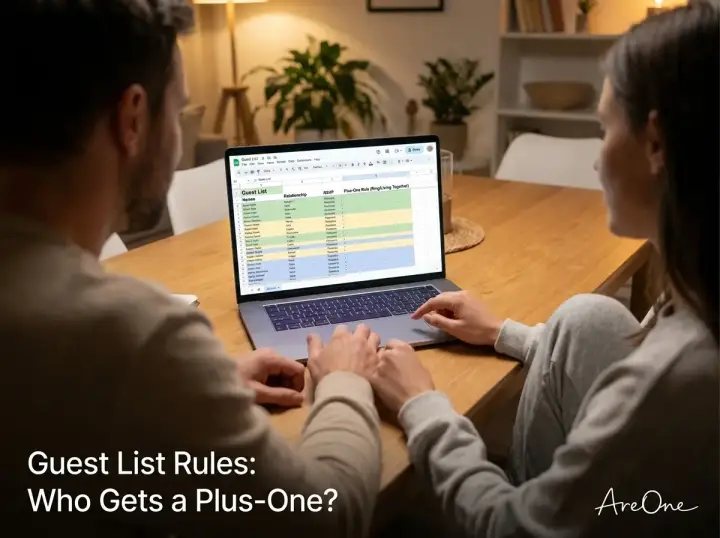
Creating a consistent rule for your guest list is the easiest way to remain fair and avoid hurt feelings. Many couples adopt the 'ring or living together' rule, but modern celebrations often call for a more nuanced approach. You might decide to give a plus-one to your entire wedding party, regardless of their relationship status, to thank them for their dedication.
Another helpful strategy is considering your guest's comfort level. If you are inviting a coworker who does not know anyone else at the wedding, offering them a guest ensures they have someone to socialize with during the reception. Think about the social dynamics of your reception tables.
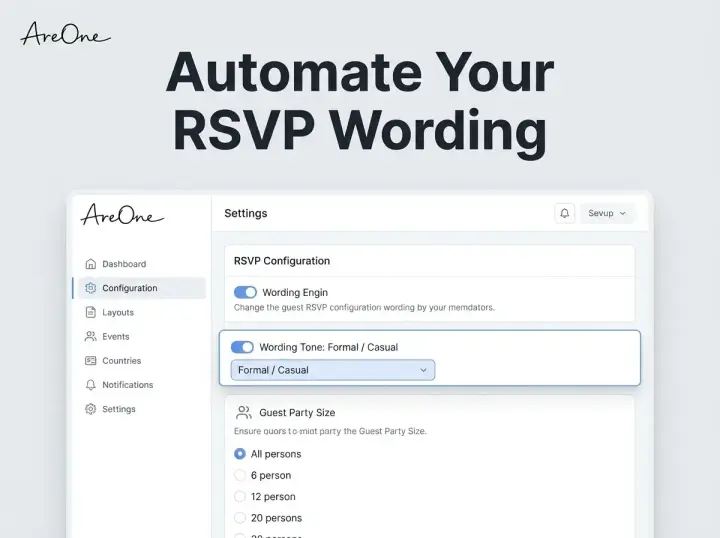
When you have made your decisions, document them clearly in your guest list spreadsheet. This makes the next step—crafting your digital invites—infinitely easier. Using an intelligent platform like AreOne's RSVP feature allows you to specify exactly who receives a plus-one behind the scenes, ensuring a seamless experience for your attendees.
Quick Rules for Perfect Invitations: Tone, Clarity, and Culture
Before you copy and paste any templates, it is vital to establish the overall tone of your event. The phrasing you choose should beautifully reflect the atmosphere of your celebration. An elegant, black-tie gala requires a very different approach than a relaxed, backyard barbecue.
Clarity is your best friend when managing your guest list. Never leave room for interpretation. If an invitation is meant for one person only, address it solely to them. If you are allowing a guest, explicitly state it. Leaving the RSVP card blank for them to fill in the number of attendees is a recipe for disaster.
According to trusted guidelines from authorities like Emily Post, the most polite way to handle uninvited extras is to preemptively address the envelope or digital card correctly. Let your phrasing do the heavy lifting for you.
Maintaining Cultural Sensitivity and Respect
Weddings frequently bring together diverse families with varying traditions and expectations. In some cultures, it is expected that whole families, including distant relatives and casual acquaintances, are invited. Navigating these expectations requires tact and patience.
If your parents or future in-laws are contributing to the wedding budget, they may feel entitled to dictate the plus-one rules for their friends. Have an open, calm discussion about your venue's strict capacity limits. Compromise where possible, but stand firm on your non-negotiables.
When drafting your wording for an international or multicultural guest list, lean toward more formal, respectful phrasing. This minimizes the risk of cultural misunderstandings and ensures everyone feels honored by your invitation.
Copy-Paste Wedding Invite Examples for Every Style
Writing your invitations from scratch can be intimidating. To make your planning process as smooth as possible, we have compiled a selection of our favorite wedding invite examples. Feel free to copy these directly or tweak them to suit your unique personality.
Below is a quick reference guide comparing different tones. Notice how the vocabulary shifts to match the formality of the event.
| Style | Outer Address / Digital Header | RSVP Wording |
|---|---|---|
| Formal | Mr. James Smith and Guest | We have reserved two seats in your honor. Please reply by [Date]. |
| Semi-Formal | James Smith & Guest | We would love for you and a guest to join us! RSVP by [Date]. |
| Casual | James + 1 | Bring a date! Let us know if you can make it by [Date]. |
Using a template saves time, but understanding why a specific phrase works allows you to customize it beautifully. The key is matching the text to your overarching aesthetic.
Short Versions for Mobile-Friendly and Digital Invites
When sending digital invitations, you must consider how your text looks on a small smartphone screen. Guests tend to skim digital content, so brevity is essential. Keep your sentences crisp and direct.
Example 1: “We’ve reserved 2 seats for you. Please RSVP by October 1st.”
Example 2: “You + a guest are invited to celebrate with us!”
Example 3: “Please join us! A plus-one is warmly welcomed.”
Browse invitation layouts that fit your plan.
Compare layouts for schedules, travel details, guest guidance, and RSVP information before choosing one for your invitation.



These short snippets are perfect for text message invites or minimalist email designs. They convey all the necessary information without cluttering your beautiful template. If you are browsing through modern templates, you will notice that less text often results in a more elegant, impactful design.
Longer Versions for Traditional Elegance
If you are planning a traditional or religious ceremony, you have more room to expand your phrasing. Long-form wording feels romantic and honors the gravity of the occasion.
Example 1: “Mr. Thomas Reynolds, you are cordially invited to share in our joy. We welcome you to bring a guest of your choosing to our celebration.”
Example 2: “The honor of your presence, along with a guest, is requested at our marriage ceremony.”
Example 3: “We joyfully anticipate your attendance. Please feel free to bring a companion to celebrate this momentous occasion with us.”
These examples work wonderfully for printed secondary cards or the detailed sections of your wedding website. They slow the reader down and establish a tone of utmost respect and grandeur.
Formal vs Casual Wording: Striking the Right Balance
Deciding between formal vs casual wording is a common dilemma. Your choice should align with your venue, your attire, and your general vibe. A grand ballroom demands formal language, while a beachside sunset ceremony pairs perfectly with casual phrasing.
Formal wording relies on third-person phrasing, spelled-out numbers, and traditional titles. It creates an atmosphere of sophistication and timeless elegance. Casual wording uses first-person pronouns, playful language, and direct instructions. It feels warm, intimate, and personal.
If you are struggling to decide, a semi-formal approach is a safe and popular middle ground. It maintains a sense of occasion while remaining approachable and friendly. For advice on when to finalize this text, refer to our comprehensive wedding invitation timeline.
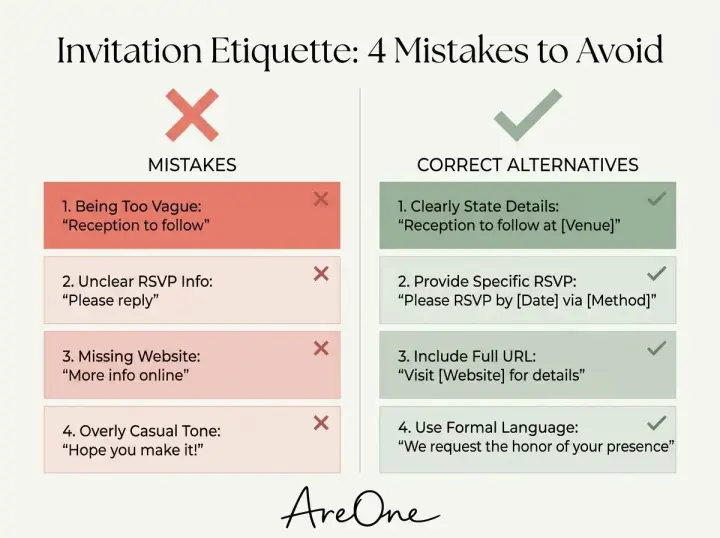
Common Mistakes Couples Make (And Better Alternatives)
Even with the best intentions, couples frequently stumble when addressing their guests. A minor phrasing error can lead to a massive headache closer to your wedding day.
Need a faster RSVP flow?
Use AreOne to collect guest replies, meal choices, and reminders in one clean workflow.
Mistake 1: Being Too Vague. Writing 'The Smith Family' when you only intend to invite the parents is a classic error. The parents will naturally assume their children are invited.
The Alternative: Address the invitation specifically to 'Mr. and Mrs. Smith'. If you are offering them a plus-one instead of inviting their kids, use AreOne’s settings to restrict the RSVP party size to exactly two people.
Mistake 2: The 'No Ring, No Bring' Rule Gone Wrong. Communicating this rule bluntly can come across as harsh and judgmental to your single friends.
The Alternative: Do not announce a blanket rule on your wedding website. Instead, simply address the invitations correctly. If someone asks why they cannot bring a date, politely explain that venue constraints forced you to keep the guest list strictly to close family and long-term partners. Major publications like The Knot recommend this discrete approach.
Mistake 3: Forgetting to Ask for the Guest's Name. If you allow a plus-one but fail to collect their name, you will end up with place cards that say 'Guest of Sarah'. This feels impersonal and makes seating charts difficult.
The Alternative: Use an intelligent digital RSVP form that requires the primary guest to type in the first and last name of their companion. This also helps you track dietary restrictions accurately.
Mistake 4: Guilt-Tripping Guests. Adding language like 'We are paying a lot per plate, so please only bring someone if it is serious' is a massive breach of etiquette.
The Alternative: Keep finances completely out of your communication. Set your boundaries firmly but silently through your exact phrasing.
Your Essential Plus-One Checklist
Before you hit send on your gorgeous digital invites, run through this quick, stress-saving checklist to ensure you have covered all your bases:
- Have you finalized your absolute maximum venue capacity?
- Is your catering budget strictly set?
- Have you applied your plus-one rule consistently across your friend groups?
- Did you find out the names of established partners beforehand to write them on the invite?
- Does your RSVP form require the plus-one's name and dietary needs?
- Is your tone matching the formality of your wedding day?
- Have you prepared a polite, calm response for guests who ask for exceptions?
Where Exactly to Put Plus One Wording on a Digital Invite
With paper invitations, the 'and guest' typically lived on the inner envelope. But with modern digital invites, the architecture of the information is slightly different. You want to make the details impossible to miss without ruining the visual appeal of your design.
The most elegant solution is to put the primary invitation wording on the main digital card, and handle the guest details within the RSVP flow. When your guest clicks 'RSVP', they are greeted by a personalized welcome screen that explicitly states: 'You are RSVPing for yourself and 1 guest.'
If you prefer to be upfront, you can include a brief line at the bottom of the digital invitation design, just below the date and venue details. A simple 'Adult reception to follow. Plus-ones welcome.' works beautifully. Remember, digital platforms give you the power to customize the experience per guest. For more details on how our software handles this intelligently, check out our pricing plans which include advanced guest list segmentation.
According to Brides magazine, modern couples are increasingly relying on digital solutions to manage these exact scenarios. The technology prevents guests from writing in uninvited names, saving you from having to make uncomfortable phone calls.
Consider Us Your Perfect Match for Plus One Wording
Your wedding day should be surrounded by the people who matter most to you, and protecting that intimate atmosphere starts long before the ceremony. By setting clear boundaries, embracing helpful technology, and choosing words that reflect your warmth, you can manage your guest list with absolute grace.
Take a deep breath and trust the process. You have the tools, you have the examples, and you have the vision. Now it is time to bring it all to life. Consider this comprehensive guide your ultimate companion—your perfect match for plus one wording success.
Frequently Asked Questions
Find quick answers to common questions about this article.

No approved comments yet.