
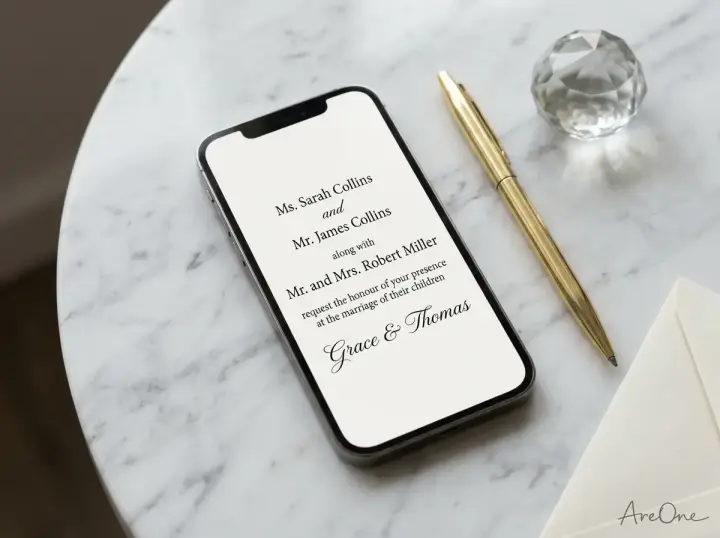
TL;DR: Navigating divorced parents wedding wording doesn't have to be stressful; this guide provides clear, modern templates and etiquette tips to honor everyone beautifully while keeping your invitations guest-friendly.
Planning your big day is an exciting journey, but we know that certain details can feel a bit like walking a tightrope. One of those delicate details is finding the perfect divorced parents wedding wording. You want to honor the family members who raised you, maintain peace, and ensure your beautiful invitations remain perfectly clear for your guests. Complex family dynamics are completely normal, and you are definitely not the first couple to face this common planning hurdle.
Whether you are aiming for a traditional, classic tone or prefer a relaxed, contemporary vibe, getting the phrasing exactly right matters. Hosting traditions have evolved significantly over the years. We understand that blending families, acknowledging financial contributions, and showing emotional appreciation requires tact. That is why we are here to help you navigate these nuanced waters with grace, clarity, and style.
By understanding the core principles of modern etiquette, you can confidently craft a beautiful introduction to your celebration.
When to Use Divorced Parents Wedding Wording
Understanding the context behind your invitation phrasing is the first step toward a simpler experience. Traditionally, the individuals paying for the celebration are listed as the hosts on the invitation. However, modern weddings often blend financial contributions with emotional support. If both of your divorced parents are contributing to the big day—whether financially, practically, or emotionally—they should both be honored on the host line of your invitation.
Proper wedding invitation etiquette dictates that all primary hosts receive recognition. When parents are divorced, this means naming them distinctly to avoid any confusion among your guests. If one parent is funding the entire event while the other is merely attending as a guest, you might choose to only list the contributing parent. However, many couples prefer to list both parents regardless of financial input, simply to honor their lifelong support and guidance.
You also need to consider the current relationship between the divorced parents. If the divorce was amicable, phrasing is usually straightforward and easily agreed upon. If the relationship is strained, careful wording becomes a crucial tool for keeping the peace. By separating their names onto different lines, you clearly indicate their separate households while still uniting them in the shared joy of your upcoming marriage.
As guest lists grow, clarity becomes even more vital. Older relatives and distant family friends rely heavily on the host line to understand the family structure. Taking the time to craft this thoughtfully ensures that no one is left guessing when they open your beautiful invitation.
Quick Rules for Modern Wedding Invitation Etiquette
Before you start typing out your host lines, it is helpful to understand the foundational rules of invitation phrasing. The most critical rule when dealing with divorced parents is the omission of the word "and" between their names. In traditional stationery etiquette, the word "and" implies marriage. By placing their names on separate lines without an "and" connecting them, you clearly communicate to your guests that they are no longer married.
The standard order of appearance is another important detail to remember. Typically, the mother's name is listed first, followed by the father's name on the subsequent line. This is a longstanding tradition that helps maintain a sense of formal respect. If your mother has remarried, you will usually use her new married name, or her chosen professional name, depending on her preference. Always ask your parents how they prefer to be addressed to avoid any unintended hurt feelings.
Cultural sensitivity and clarity must always take precedence over strict tradition. If your families have specific cultural expectations regarding the announcement of a marriage, try to weave those traditions into the modern phrasing. Remember that your older guests, like grandparents and elderly family friends, rely on this wording to understand exactly who is hosting the event. Keep the fonts legible, the spacing generous, and the message unmistakably clear.
| Wedding Style | Wording Tone | Best Use Case |
|---|---|---|
| Black-Tie / Traditional | Highly Formal | Grand hotel ballrooms, religious ceremonies, and traditional multi-course dinners. |
| Semi-Formal / Cocktail | Elegant but Approachable | Boutique venues, garden parties, and modern elegant celebrations. |
| Casual / Modern | Relaxed and Direct | Beach weddings, rustic barns, and laid-back digital invitations. |
For more deep dives into traditional paper etiquette, you can always reference authority resources like Emily Post's etiquette guides.
Copy-Paste Examples: Formal vs Casual Wording
Staring at a blank screen can be daunting. To make your planning process as seamless as possible, we have gathered several proven templates. These templates balance the delicate nature of family dynamics while providing clear instructions to your guests. The choice between formal vs casual wording ultimately depends on the overall vibe of your celebration and the venue you have chosen.
Formal phrasing often includes full legal names, formal titles, and traditional requests for attendance, such as "request the honor of your presence." Casual phrasing leans toward conversational language, utilizing first names and inviting guests to "celebrate" or "join" the couple. Both approaches are completely valid; the key is consistency throughout your entire wedding website and invitation suite.
Let's look at several wedding invite examples you can easily adapt for your own use. You can also review our extensive ultimate guide to invitation wording for even more inspiration.
Short Versions for Mobile-Friendly & Digital Invites
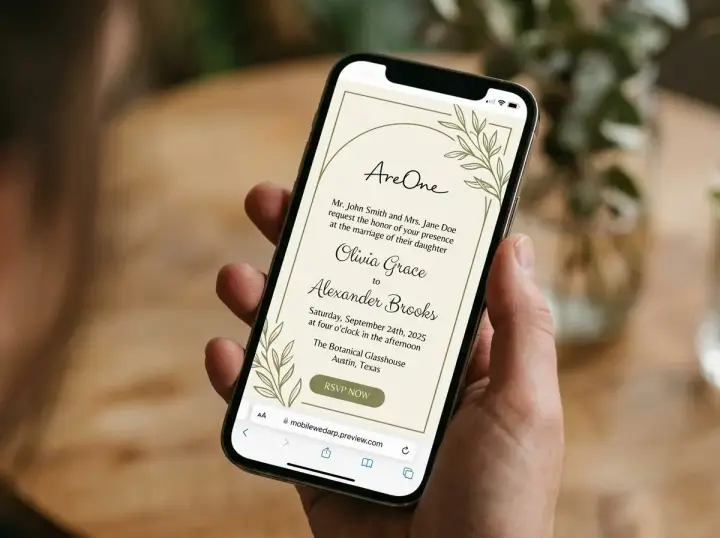
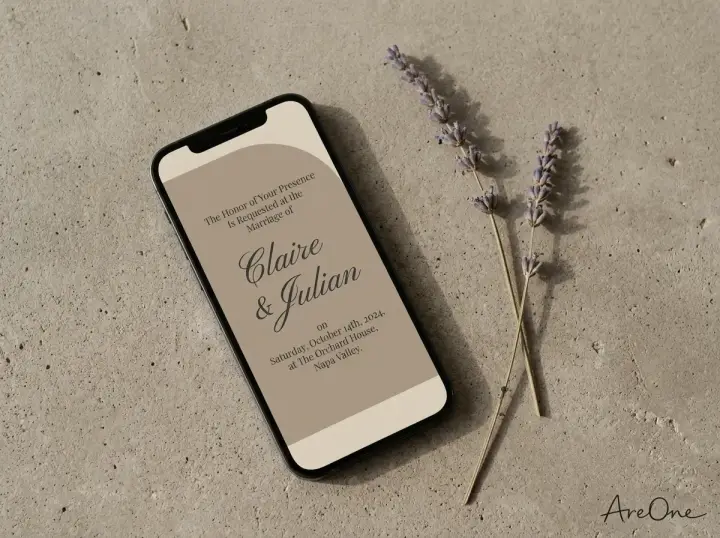
Digital invitations require a slightly different approach. Because guests are reading your invite on smaller smartphone screens, brevity is your best friend. You want to communicate the essential information quickly without cluttering the screen with overly dense paragraphs. Short, punchy phrasing is effective for modern couples using digital platforms.
Example 1: The Modern Joint Host
Jane Doe
John Smith
invite you to celebrate the marriage of their daughter
Emily Smith to Michael Johnson
Example 2: The Casual Celebration
Together with their parents, Jane Doe & John Smith,
Emily and Michael invite you to a night of dinner and dancing!
These concise options look beautiful on mobile displays. If you need a stylish layout to house your text, we recommend taking a moment to browse our modern templates designed specifically for perfect mobile readability.
Recommended ReadingMicro Wedding Invitation Wording: Modern Examples & Etiquette →Longer Traditional Wording for Divorced Parents Hosting
If you are planning a formal affair, you will want to lean into traditional etiquette. This phrasing is typically longer, more lyrical, and utilizes formal titles. It beautifully sets the stage for a black-tie event and signals to your guests that they should anticipate an elegant evening. When using this phrasing, ensure your typography is legible, especially if you are utilizing script fonts.
Example 3: The Formal Request
Mrs. Jane Doe
Mr. John Smith
request the honor of your presence
at the marriage of their daughter
Emily Rose Smith
to
Mr. Michael Thomas Johnson
Example 4: The Joint Blessing
Ms. Eleanor Davis
Mr. Robert Thompson
joyfully request the pleasure of your company
as their daughter, Clara Jane Thompson,
unites in marriage with David Lee.
Notice how the parents' names are strictly separated by a line break rather than an "and." This is the cornerstone of traditional phrasing for divorced parents. For more nuanced scenarios, you might also want to read the advice offered by The Knot's phrasing experts.
Wedding Invite Examples When One Parent Is Remarried
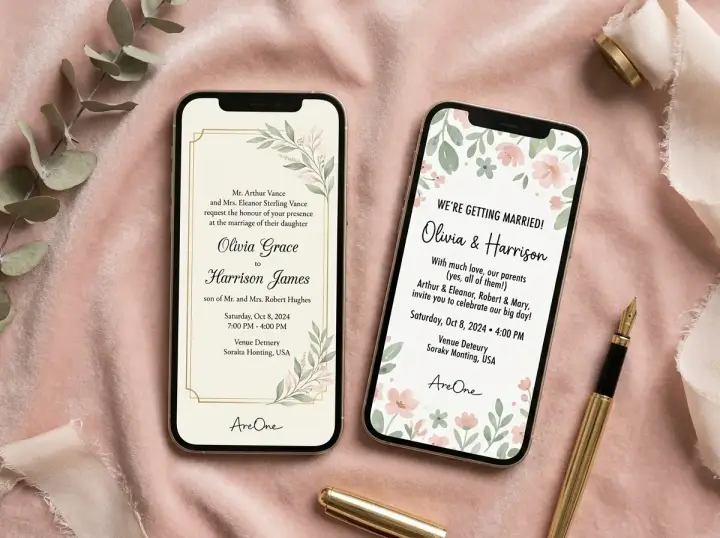
When stepparents enter the picture, the host line requires an extra layer of thought. If a stepparent has played a significant role in your life or is helping to finance the wedding, it is a beautiful gesture to include them. The standard practice is to pair the married couple on one line with an "and," while keeping the divorced parents separated by a line break.
Example 5: Mother Remarried, Father Single
Mr. and Mrs. William Carter
Mr. John Smith
request the pleasure of your company
at the wedding of...
Example 6: Both Parents Remarried
Mr. and Mrs. William Carter
Mr. and Mrs. John Smith
invite you to witness the marriage of their daughter...
Browse invitation layouts that fit your plan.
Compare layouts for schedules, travel details, guest guidance, and RSVP information before choosing one for your invitation.



This approach clearly acknowledges the current marital statuses of everyone involved. It is polite, respectful, and ensures that guests understand exactly who is extending the invitation. Always confirm the spelling of stepparents' names and their preferred titles before finalizing your design.
Wording Options When One Parent Is Deceased
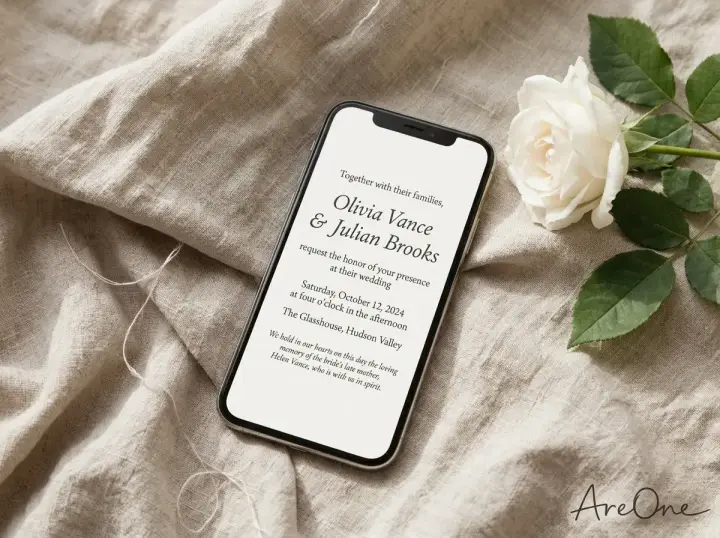
Navigating the wording when one parent has passed away is emotional. You want to honor their memory without making the invitation sound like a memorial notice. The most graceful way to handle this is to use the phrase "the late" before their name. This acknowledges their eternal importance to you while maintaining the joyous tone of a wedding celebration.
Example 7: Honoring a Deceased Parent
Mrs. Jane Doe
and the late Mr. John Smith
request the honor of your presence
at the marriage of their daughter...
If the surviving parent is remarried, you would list the current married couple first, followed by a sweet acknowledgment of the late parent lower down in the text. You could write: "Emily Smith, daughter of Mrs. Jane Carter and the late Mr. John Smith." This keeps the host line accurate while providing a touching tribute.
Common Mistakes Couples Make (And Better Alternatives)
Even with the best intentions, couples can sometimes stumble when drafting their host lines. These mistakes can lead to guest confusion or, worse, hurt feelings among family members. By knowing what to watch out for, you can bypass the drama and create a beautifully worded invitation suite that everyone will appreciate.
Need a faster RSVP flow?
Use AreOne to collect guest replies, meal choices, and reminders in one clean workflow.
The most frequent error is accidentally linking divorced parents with the word "and." As we mentioned earlier, "and" implies a married couple in the language of formal etiquette. If you write "Jane Doe and John Smith," you are unintentionally telling your guests that your parents are still married. Always use line breaks to separate independent hosts.
Another common misstep is forgetting to clarify the couple getting married. If your mother has remarried and uses a different last name, and you share your father's last name, guests who only know your mother might be confused. Always ensure your full name, or at least your first and last name, is clearly stated so there is no ambiguity about who is tying the knot.
Finally, many couples make the mistake of surprising their parents with the wording. Your wedding invitation is not the place for surprises. Discussing the phrasing with all parties involved before hitting "publish" or "print" is an essential step in modern wedding planning. It guarantees that everyone feels comfortable and respected before the invites ever reach your guests' inboxes.
To keep you on track, here is a quick pre-send sanity checklist:
- Did I remove the word "and" between my divorced parents' names?
- Are the names placed on completely separate lines to indicate separate households?
- Did I double-check the spelling of all new last names and formal titles?
- Have I shown a draft to both parents to confirm they are comfortable with the phrasing?
- Does the tone of the wording accurately match the actual formality of my event?
- Is the font size large enough for older guests to read clearly on a mobile phone display?

How to Add This Wording to a Digital Invite
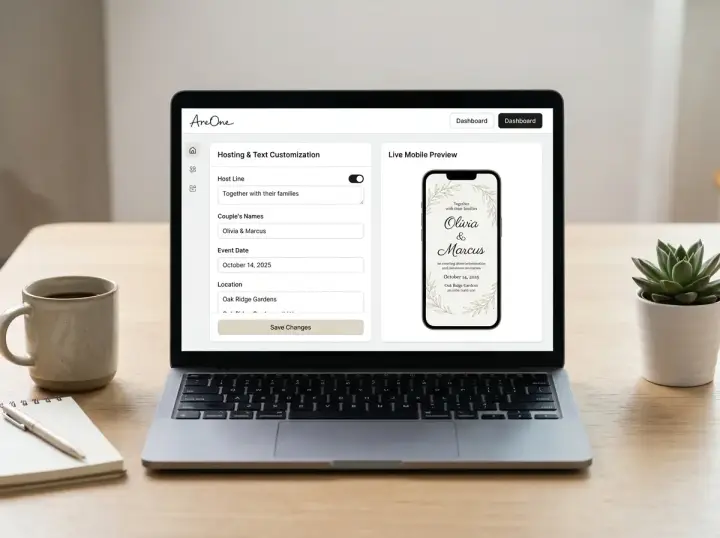
Now that you have selected the perfect wording, it is time to put it into action. Adding your custom text to a digital invite should be an intuitive, seamless process. With modern platforms, you have complete control over the layout, typography, and spacing, allowing you to perfectly execute the line breaks required for divorced parents wedding wording.
When you are designing your layout, the host line typically sits at the very top of the invitation. It serves as the opening announcement. You will want to choose a clear, legible font for this section. While sweeping calligraphy looks beautiful for your names, the host line should ideally be in a clean serif or sans-serif font so that every name is easily identifiable for your guests, especially those viewing on smaller screens.
Using a dedicated wedding platform makes this easy. Our tools are built with flexibility in mind, allowing you to adjust spacing perfectly. Once your text is set, you can connect your invitation to your guest management tools. To see how simple it is to track responses once your invite goes out, explore our smart wedding RSVP features.
We also understand that planning a wedding involves managing a budget. That is why we offer flexible options for couples at every stage of their journey. Whether you are looking for free introductory tools or premium upgrades, you can review all your options on our transparent pricing page. Timing is also crucial; be sure to consult a reliable wedding invitation timeline so you know exactly when to hit send.
For more nuanced ideas on how to weave different families together, you can also check out the advice shared by Brides magazine, which offers excellent perspectives on modern family dynamics and etiquette evolution.
A Vow to Clarity and Connection
Tying the knot shouldn't mean tangling your family ties. By thoughtfully selecting your divorced parents wedding wording, you are setting a brilliant tone of unity, profound respect, and deep love right from the very start of your celebration. It is a small but powerful detail that speaks volumes to the people who matter most, ensuring your big day begins with absolute harmony and boundless joy.
Frequently Asked Questions
Find quick answers to common questions about this article.
No approved comments yet.