
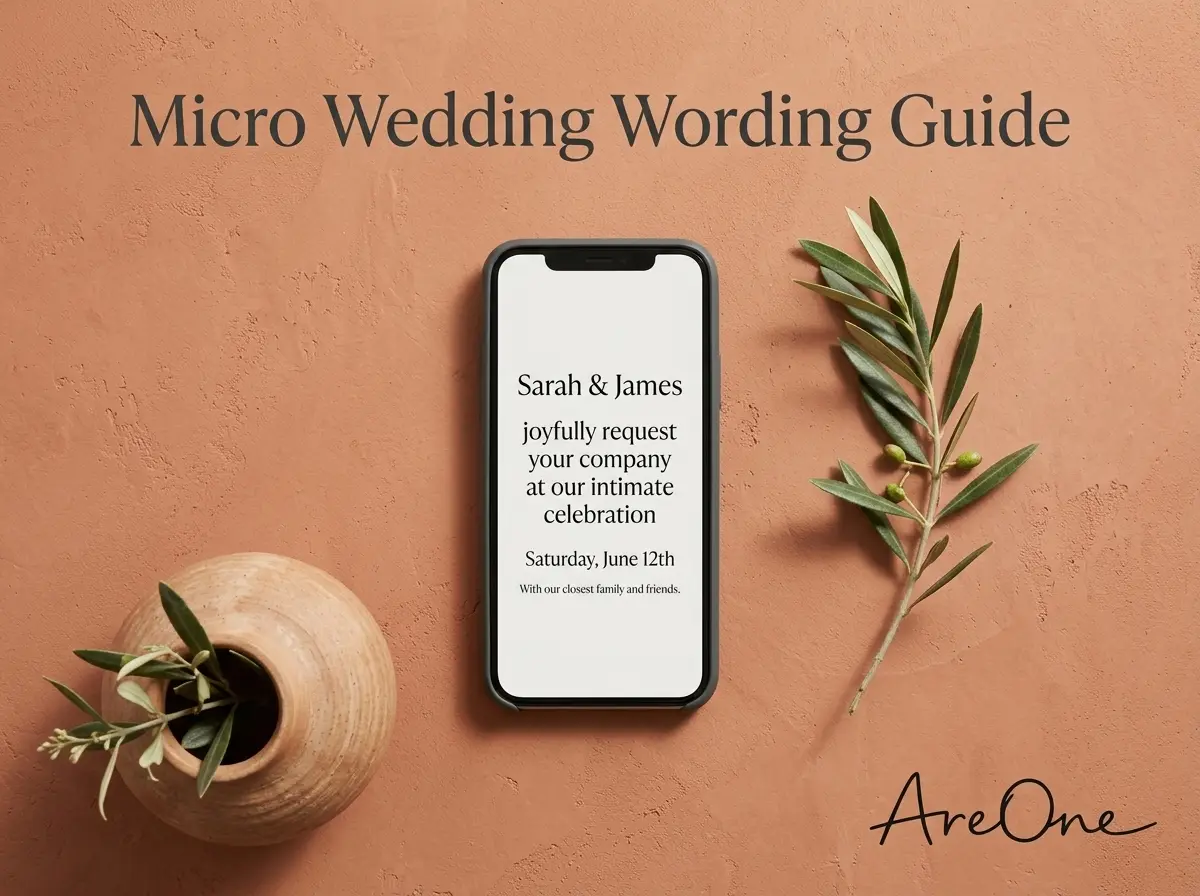
TL;DR: Crafting the perfect micro wedding invitation wording requires balancing intimacy with clarity, ensuring your closest family and friends feel valued while clearly understanding the logistics of your small-scale celebration.
The Rise of Intimate Celebrations and When to Use This Wording
Planning a smaller, more intimate celebration is a beautiful choice that allows you to spend quality time with those who matter most. When you intentionally shrink your guest list to fifty people or fewer, every detail takes on a heightened level of personal significance. This is exactly where your micro wedding invitation wording becomes important. The text you choose sets the immediate expectations for your guests, giving them a glimpse into the unique, closely-knit atmosphere you are creating.
Because an intimate celebration often breaks away from standard ballroom traditions, the way you invite people needs to reflect that shift. Standard templates can feel too stiff or expansive for a gathering in a cozy backyard, a private dining room, or a scenic mountaintop. Your wording must subtly communicate that this event is exclusive, carefully curated, and personal. It tells your guests that their presence is not just requested, but fundamentally essential to the joy of your day.
Couples often wonder exactly when they should lean into specialized phrasing. The answer is simple: the moment your event becomes small enough that a standard, formal broadcast feels unnatural. If you are having a brief ceremony followed by a casual brunch, your text should reflect that breezy, relaxed vibe. Conversely, if you are hosting a elegant but tiny black-tie dinner, your text still needs to carry that sophisticated weight while acknowledging the small circle of attendees.
Using digital platforms to send these intimate notes adds another layer of modern convenience. Digital invites allow you to update your guests instantly, which is perfect for smaller groups that might need real-time updates about a bespoke weekend itinerary. However, even on a screen, the emotional resonance of your message remains paramount. The words you choose are the very first step in welcoming your loved ones into your new life together.
Navigating Wedding Invitation Etiquette for Small Guest Lists
Even when your celebration is tiny, proper wedding invitation etiquette remains a vital part of the planning process. Etiquette is not about following dusty, outdated rules; rather, it is about making your guests feel comfortable, informed, and respected. For older relatives or guests who might not be as tech-savvy, clear and polite phrasing serves as a warm, reassuring bridge to your modern digital celebration.
One of the primary challenges with small events is managing the expectations of extended family and acquaintances who might not receive an invite. When crafting your message for those who are invited, you want to emphasize the intimate nature of the day. This helps your guests understand why they might not be able to bring a plus-one, or why the venue is a non-traditional space with limited seating. Transparency wrapped in warmth is the ultimate goal.
Before you finalize your digital draft, you should review your text against traditional standards to ensure you have not accidentally omitted crucial details. Seeking traditional advice from Emily Post can provide a strong foundation for your phrasing, even if you decide to modernize it later. The core elements of who, what, when, and where never go out of style, regardless of how small your guest list might be.
To keep you on track, we have compiled a golden checklist of etiquette rules specifically tailored for intimate events. Keep these principles in mind as you draft your message:
- Be explicitly clear about the scale: Use phrases like 'intimate ceremony' or 'small gathering' so guests understand the context immediately.
- Address plus-ones with precision: Because space is strictly limited, ensure your digital envelopes or greeting screens specifically name every invited individual.
- Highlight the specific setting: If the venue requires special footwear or attire, mention it politely to ensure everyone's comfort.
- Keep the event timeline simple and visible: Provide exact times for the ceremony and the subsequent celebration to avoid any confusion.
- Provide foolproof RSVP instructions: Clearly state how, where, and when to respond using your chosen digital platform, ensuring elderly guests understand the process.
Copy-Paste Micro Wedding Invitation Wording Options
Staring at a blank screen can be daunting, especially when you want your message to be perfect. To make the process simpler, we have developed several wedding invite examples that you can copy, paste, and tweak to match your specific style. Whether you are hosting a quiet morning elopement with family or a sophisticated private dinner, these templates offer a solid starting point.
When reviewing these options, remember that your personal voice is the most critical ingredient. You can mix and match a formal introduction with a slightly more relaxed reception description, provided the overall tone remains cohesive. The goal is to make the reader feel like you are speaking directly to them, extending a warm hand to welcome them to your most special day.
Short, Mobile-Friendly Versions for Digital Invites
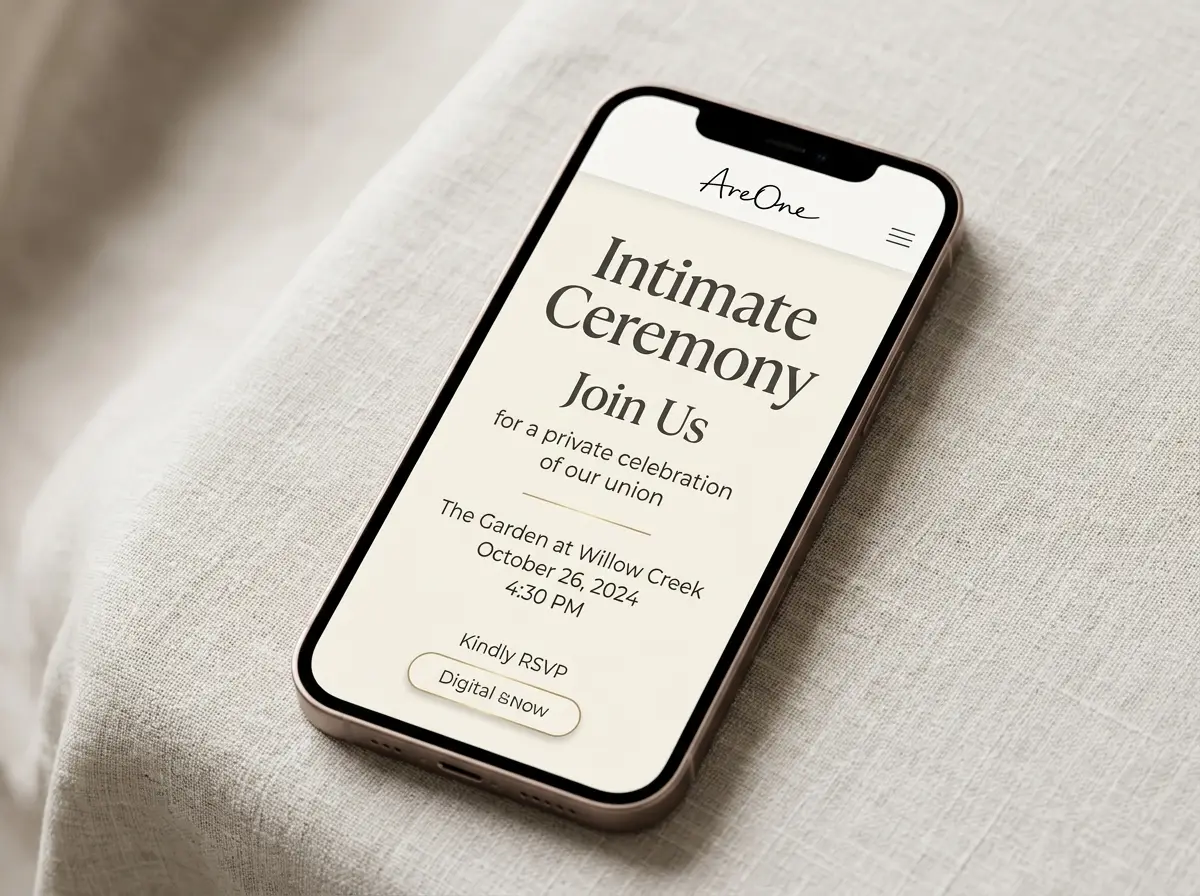
When sending digital invitations that will primarily be viewed on smartphones, brevity is your best friend. Mobile screens have limited real estate, and guests typically skim text while on the go. These short, punchy templates deliver all the necessary facts without sacrificing an ounce of warmth or romance.
Example 1: The Modern Minimalist
'We are keeping things small, but our love for you is huge. Please join us for an intimate wedding ceremony as we exchange vows, followed by a celebratory dinner.'
Why it works: This option is direct. It immediately addresses the small size of the wedding, injecting a bit of lighthearted warmth before transitioning into the essential details.
Example 2: The Casual Celebration
'Nothing fancy, just love. We're tying the knot in a small gathering of our closest family and friends. We would be thrilled if you could celebrate with us.'
Why it works: This phrasing is perfect for backyard ceremonies or casual restaurant receptions. It lowers the pressure on guests regarding dress codes and formalities, setting a relaxed, joyful stage.
Example 3: The Direct & Sweet
'With immense joy, we invite you to share in our intimate wedding day. Good food, close friends, and forever promises.'
Why it works: It uses a poetic, rhythmic structure that reads beautifully on a digital screen. It promises a lovely guest experience (good food) alongside the emotional core of the day (forever promises).
Longer, Traditional Versions for Classic Tastes
Some intimate weddings are just as formal and structured as a three-hundred-person gala, just on a much smaller scale. If you are hosting a elegant affair, your phrasing should reflect that sophisticated atmosphere. These longer templates honor traditional structures while gently acknowledging the exclusive nature of your guest list.
Example 1: Hosted by the Couple
'Because you have shared in our lives with your friendship and love, we joyfully invite you to our intimate wedding celebration. Please join us as we exchange vows surrounded by our immediate family and closest friends.'
Why it works: This honors the traditional structure of a classic invite while specifically using the word 'intimate' to clarify the scale of the event.
Example 2: Hosted by the Parents
'Mr. and Mrs. Jonathan Smith request the honor of your presence at the intimate marriage of their daughter, Sarah Elizabeth, to Michael James, as they celebrate with a small circle of loved ones.'
Why it works: It respects the classic parental hosting etiquette, which older generations often appreciate, while firmly establishing that the event is limited in size.
Example 3: The Romantic Formal
'Together with their families, Emma and David request the pleasure of your company at their micro wedding. A private ceremony will be followed by an evening of fine dining and celebration.'
Why it works: Using the term 'micro wedding' directly is becoming increasingly popular. It clearly sets boundaries while promising an elegant evening experience.
Mastering Formal vs Casual Wording Dynamics
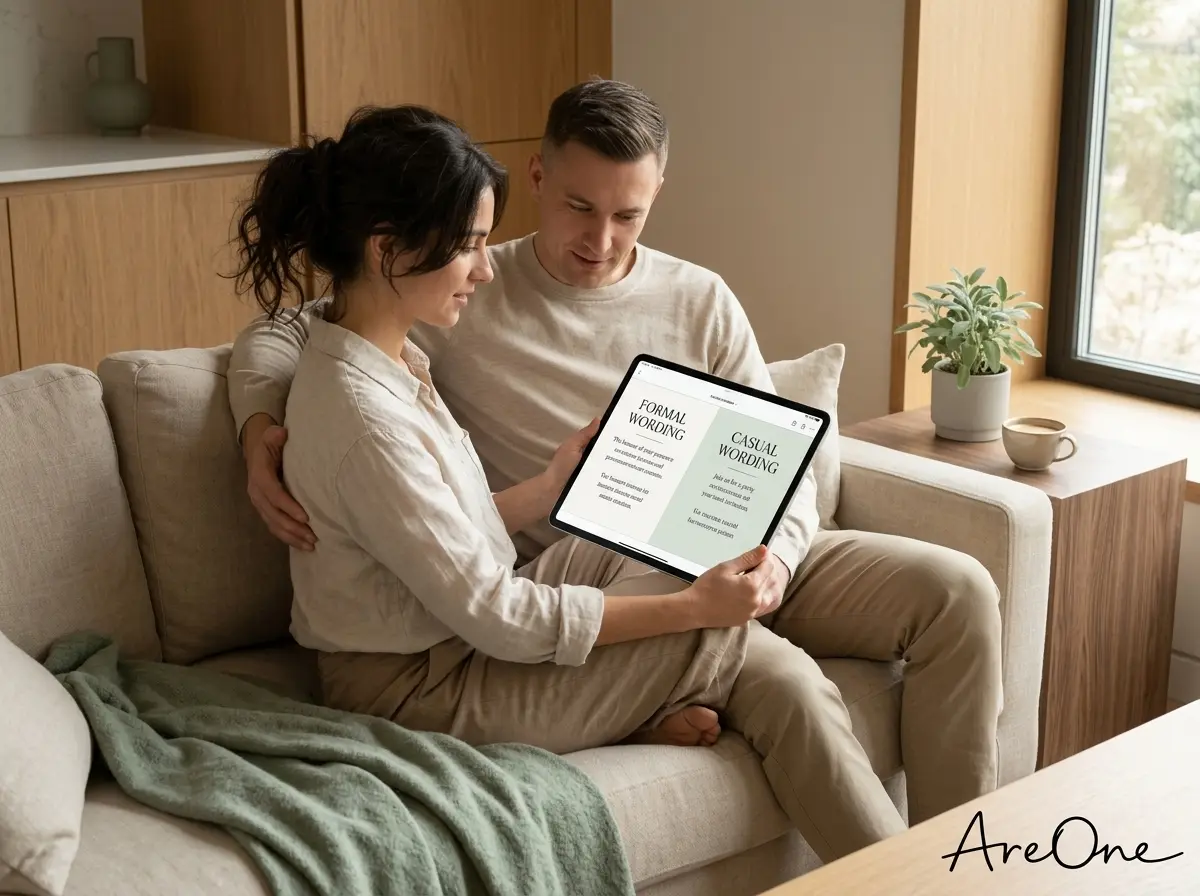
Understanding the nuances of formal vs casual wording is essential for creating a cohesive guest experience. The language you choose acts as a set of subtle clues, telling your guests exactly what they should wear, how they should behave, and what type of evening they are about to attend. Mixing these signals can lead to confused guests who show up in jeans to a black-tie dinner, or in a tuxedo to a casual beach picnic.
Browse invitation layouts that fit your plan.
Compare layouts for schedules, travel details, guest guidance, and RSVP information before choosing one for your invitation.



Formal wording typically relies on traditional phrasing, third-person perspectives, and a structured layout. It utilizes phrases like 'request the honor of your presence' or 'cordially invite you.' This style is structured and leaves very little room for ambiguity. If you are referencing trusted guides at Brides, you will see that formal text requires you to spell out numbers, times, and dates completely, adding a layer of deliberate elegance to the visual design.
Casual wording, on the other hand, breaks the fourth wall. It speaks directly to the guest using first-person pronouns like 'we' and 'our.' Phrases like 'join us for drinks and dancing' or 'we are getting hitched' are common. This approach is welcoming and significantly less rigid. The key is to match your words to your venue and your true personalities.
Striking the Right Balance for Your Day
Sometimes, a micro wedding falls perfectly in the middle of the spectrum. You might be wearing a beautiful gown and a tailored suit, but serving pizza from a gourmet food truck. In these semi-formal scenarios, you can blend the two styles. Start with a warm, traditional introduction, but transition into a more relaxed explanation of the reception.
For example, you might say, 'We request the pleasure of your company as we exchange vows, followed by a relaxed evening of craft cocktails and lawn games.' This perfectly bridges the gap, respecting the solemnity of the ceremony while promising a fun, simpler reception. Always read your text out loud; if it sounds completely unnatural to the way you normally speak, it might be too formal or too casual for your personal brand as a couple.
Common Mistakes Couples Make (And Better Alternatives)
Crafting your text for a tiny guest list seems straightforward, but couples frequently stumble into a few common pitfalls. Because the event is small, every word carries more weight, and miscommunications can easily lead to hurt feelings or logistical nightmares. One major error is failing to be clear about plus-ones and children. When you only have thirty seats, an unexpected guest can completely derail your catering and seating arrangements.
Another frequent misstep is being overly apologetic about the size of the wedding. Couples sometimes write phrases like, 'We are so sorry we couldn't invite everyone, but please come to our tiny wedding.' This immediately sets a negative, guilty tone. Your wedding size is a beautiful choice, not something to apologize for on the actual invitation. You want your guests to feel honored to be chosen, not reminded of those who were left out.
Finally, couples often forget to include a clear timeline or fail to specify the dress code, assuming that because the event is small, guests will just 'figure it out.' Your closest friends still need to know exactly when to arrive and what to wear. Leaving out these crucial details forces guests to constantly text you with questions during the weeks leading up to your big day, which adds unnecessary stress to your plate.
Need a faster RSVP flow?
Use AreOne to collect guest replies, meal choices, and reminders in one clean workflow.
To help you avoid these issues, review the following comparison table before you finalize your design:
| Common Mistake | Why It Fails | The Better Alternative |
|---|---|---|
| Vague plus-one rules on the envelope | Guests assume they can bring a date, leading to awkward conversations and budget strain. | Address the invite specifically to the exact individuals invited, and disable write-in options on your digital RSVP. |
| Apologizing for the small guest list | Sets a guilty, negative tone that dampens the excitement of the invitation. | Celebrate the intimacy. Use phrases like, 'We are thrilled to share this private moment with our closest circle.' |
| Omitting the dress code | Guests feel anxious about being over-dressed or under-dressed for the unique venue. | Include a brief dress code line at the bottom, such as 'Cocktail Attire' or 'Garden Casual.' |
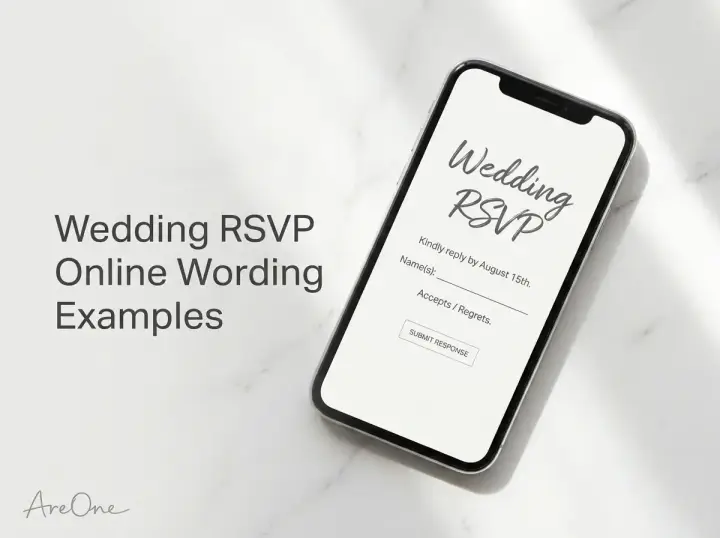
| Unclear RSVP deadlines | With small numbers, couples often assume they can just text people to get their answers. | Set a firm deadline. 'Kindly reply via our digital platform by May 1st.' |
Where to Place Your Text on a Digital Invite
When transitioning from paper to pixels, the layout of your information changes entirely. On a traditional paper suite, you have multiple cards to spread out your text: the main invite, the details card, and the RSVP card. On a digital platform, you must think about the user experience. You want to present the most critical information first, ensuring that guests do not have to scroll endlessly to figure out when and where you are getting married.
Your primary wording—the host line, the request line, and the couple's names—should take center stage on the very first screen or animation. This is the emotional hook. Using our modern digital invitation templates, you can easily arrange this text to have maximum visual impact. The font should be legible, keeping in mind that older guests might be viewing it on smaller devices with varying screen brightness.
Secondary information, such as the dress code, parking instructions, and timeline details, should be placed on a subsequent page or neatly organized below the main graphic. This prevents your beautiful primary phrasing from becoming cluttered with logistical data. Clean design not only looks stunning but also functions perfectly as an informational tool.
Optimizing the Guest Experience
The ultimate goal of a digital invitation is to make responding easy. Your text should logically flow right into the call to action for the guest. After reading your beautiful phrasing, the next immediate step should be obvious. A clearly marked button that integrates with our seamless digital RSVP tracking system ensures you get your answers quickly and without confusion.
If you are also using a wedding website to host additional travel details, your wording can serve as a simple gateway. A phrase like, 'For travel details, accommodations, and our complete weekend itinerary, please continue scrolling,' acts as polite, clear guidance. If you need help structuring the overall timing of when to send these out, consult our guide on when to send your invites to ensure perfect pacing.
The Macro Impact of Great Micro Wedding Invitation Wording
Crafting the perfect message requires a bit of thoughtful balancing, but the results are worth the effort. It is about distilling your immense joy into a concise, beautiful package that honors the select few you have chosen to surround you. By understanding etiquette, avoiding common pitfalls, and embracing the flexibility of digital design, you set the stage for an unforgettable, intimate day.
Nailing your micro wedding invitation wording doesn't have to be a macro problem. With the right templates, a dash of your unique personality, and clear communication, your smallest celebration will undoubtedly make the biggest, most beautiful impact on the hearts of your loved ones.
Ready to bring your intimate celebration to life? Start free and create your stunning digital invite today at AreOne.org. Explore premium digital features on our pricing page, or click here to browse our modern templates and find the perfect match for your big (little) day!
Frequently Asked Questions
Find quick answers to common questions about this article.

No approved comments yet.